- Insights, stories & events
- Entrepreneurial thinking
Why entrepreneurial thinking matters as a core organizational capability
7 min read
From the Executive Board to the shop floor, Körber is proving that entrepreneurial thinking—the instinct to decide, act, and take ownership without waiting for permission—can be and must be trained, scaled, and measured. Together with proven technology, entrepreneurial thinking is a core reason customers continue to choose Körber as their partner.
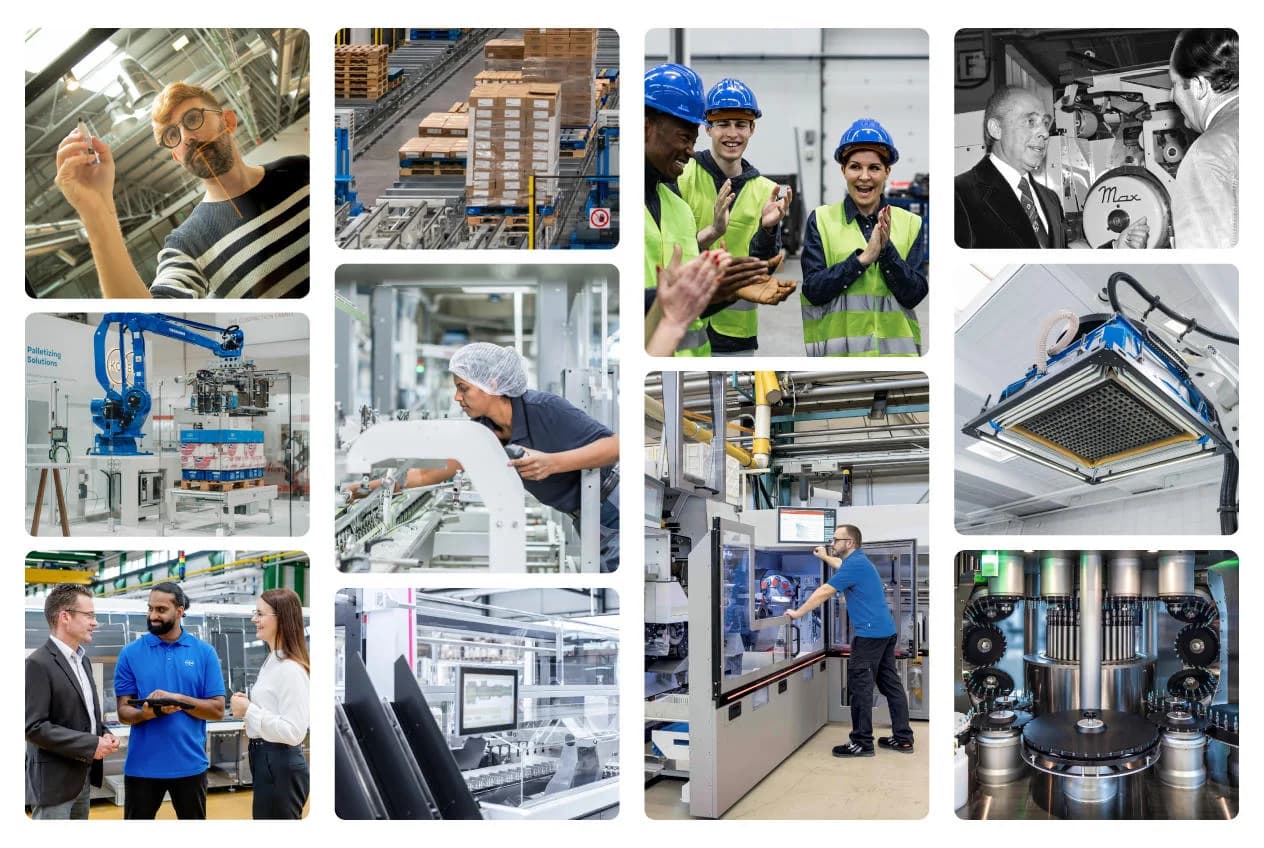
Customers no longer buy machines. They buy judgment. They buy confidence that a partner will make the right call when a production line goes down, when a market shifts overnight, or when a technology roadmap must be rewritten mid-year. That is what "entrepreneurial thinking" means within an international organization that is a leading technology provider for heterogenous industries.
It is not a founder myth, but a capability that must scale across more than 100 sites and 13,000 employees globally, in as many decision-making contexts as there are customers.
For Körber, this capability is not incidental to its strategy. It is the mechanism by which the company intends to reach its LIFE 2035 ambition—to be the leading partner for its customers in Life science, Supply chain, and High-tech by the middle of the next decade. Leadership, Innovation, Findependence, and Empowerment are the central drivers of this framework.
Entrepreneurial thinking is what makes each of them operational rather than aspirational: it is how empowerment turns into action, and how innovation becomes customer value, at the pace customers now expect. Körber's brand purpose supports this by design, reinforced in parallel by Körber's corporate-culture movement—trustful collaboration geared toward performance.
A practice—from the boardroom to the front line
Körber's Executive Board doesn't just endorse this connection—its members practice it in public, in their own words. Körber CEO Stephan Seifert[1] links entrepreneurial thinking to the company’s transformation journey, emphasizing the importance of “a culture of change being ready to change, being ready to transform.” He connects this to Körber’s purpose: “We turn entrepreneurial thinking into customer success,” and to the importance of sharing the same entrepreneurial DNA and mindset across the organization.
Erich Hoch, Körber Executive Board Member and President Business Area Pharma, locates the same instinct in how Körber grows, describing a recent acquisition as “a perfect fit for our entrepreneurial spirit and cultural DNA […].”[2]
Arungalai Anbarasu, Körber Executive Board Member and President Business Area Technologies, ties it to building culture at scale: “I place a strong emphasis on fostering a strong company culture.”[3]
Meanwhile, Dr. Helena Garriga, Körber Executive Board Member and President Business Area Supply Chain, points to where entrepreneurial capability is now being taken to a new level in ecosystem building:
“By drawing on expertise across our partner network, we help customers address challenges holistically—from inbound logistics through production optimization to outbound warehousing—all orchestrated through unified project management and support.”[4]
Four different roles—the same underlying claim: entrepreneurial thinking is a strategic lever and a practiced skill—exercised at every level, not an executive privilege and not a frontline nicety.
That is the more useful, and more inspiring, reading of the headline for every reader, whether you sit in the C-suite or on a production line: the skill is available to everybody, right now, in the next decision you make. To survive the volatility of today's global economy, entrepreneurial thinking and action are core muscles every organization must train at every level.
The tension every organization at scale faces
When it comes to real life, though, the dilemma can be structural, not motivational. Any organization could write "we think like entrepreneurs" into its brand purpose. But a capability only exists if it can be exercised locally and individually, without waiting for headquarters—by someone new to a market, someone facing a decision that no playbook covers, or someone whose first instinct is to ask an uncomfortable question rather than accept the comfortable answer.
That is why Körber did not stop at talking about entrepreneurial thinking. Translating what this means for people at all levels, across all functions or job profiles, was and continues to be part of every brand-onboarding session or in-depth training program.
Strongly supported by Körber’s Executive Board, HR built on this through a matching corporate culture initiative that—although or because set from the bottom up, reflects exactly what is needed to think and act entrepreneurial: trust, collaboration, and a shared drive for performance.
And here again, culture is not a program that is introduced once by HR and then remains unchanged. It continuously evolves through employees’ daily actions, decisions, and ways of collaborating: All are invited and encouraged to actively shape the culture and develop it further every day.
Entrepreneurial thinking in practice: Three stories, one principle
Three examples from Körber's 80th-anniversary stories show what this looks like in practice—one from each world region.
- In Arden, Denmark, Mette Holmegaard Nielsen co-designed an employee survey with her team instead of importing an HR template—insisting the tool be built with people, not for them, and asking questions leadership might not want answered. "The risk of silence is far greater than the discomfort of truth," she says.
- In Richmond, USA, Jean Klele spent more than 30 years building an HR function from scratch, through market shifts, restructuring, and constant change. Her defining insight came on day one, before she had the expertise the job required: "Responsibility doesn't wait until you feel ready."
- In Shah Alam, Malaysia, Nur Syafiqah Alias chose dual vocational training over the university path expected of her, then treated every gap in her knowledge as something to close rather than hide. "The decision didn't fit expectations—but it fit me," she says. Her advice doubles as a definition of the capability itself: "Recognize the gaps—but don't wait until you are ready. Step up. Take ownership."
Denmark, the US, Malaysia. HR, culture-building, and career development. Three entirely different contexts, but one common mechanism: each individual moved without waiting for permission, a complete playbook, or a feeling of readiness. That mechanism—deciding and acting under incomplete information, then taking ownership of the outcome—is what Körber means by "entrepreneurial thinking”.
Behind this lies a clear understanding: everything Körber does is intended to help its customers succeed.
Why this is a capability question, not an inspiration question
Brand leadership inside Körber treats this pattern—not as a feel-good story, but as evidence for a harder strategic claim.
"Customers don't experience our strategy documents. They experience whether the person in front of them can make a good call without waiting for three approvals," says Henriette Viebig, Executive Vice President Brand & Communications at Körber.
"That's why we don't talk about entrepreneurial thinking as a mindset we hope people have. We talk about it as a capability we are responsible for building—through empowerment, through trust, through the freedom to decide locally. If that capability isn't real at every site, customer satisfaction and loyalty as well as our ambitious goals for the next decade, are dreams without backing."
That framing shapes what Körber is focusing on day to day: "We'd rather point to Mette's survey, or Jean's thirty-four years of adapting without a template, than write another explanation of—or guide to—‘innovative spirit,’” Viebig continues. "One strong decision or milestone achieved is worth more than ten inspirational sentences—that's not a style preference, it's how we protect our credibility as a brand that claims to turn entrepreneurial thinking into customer success."
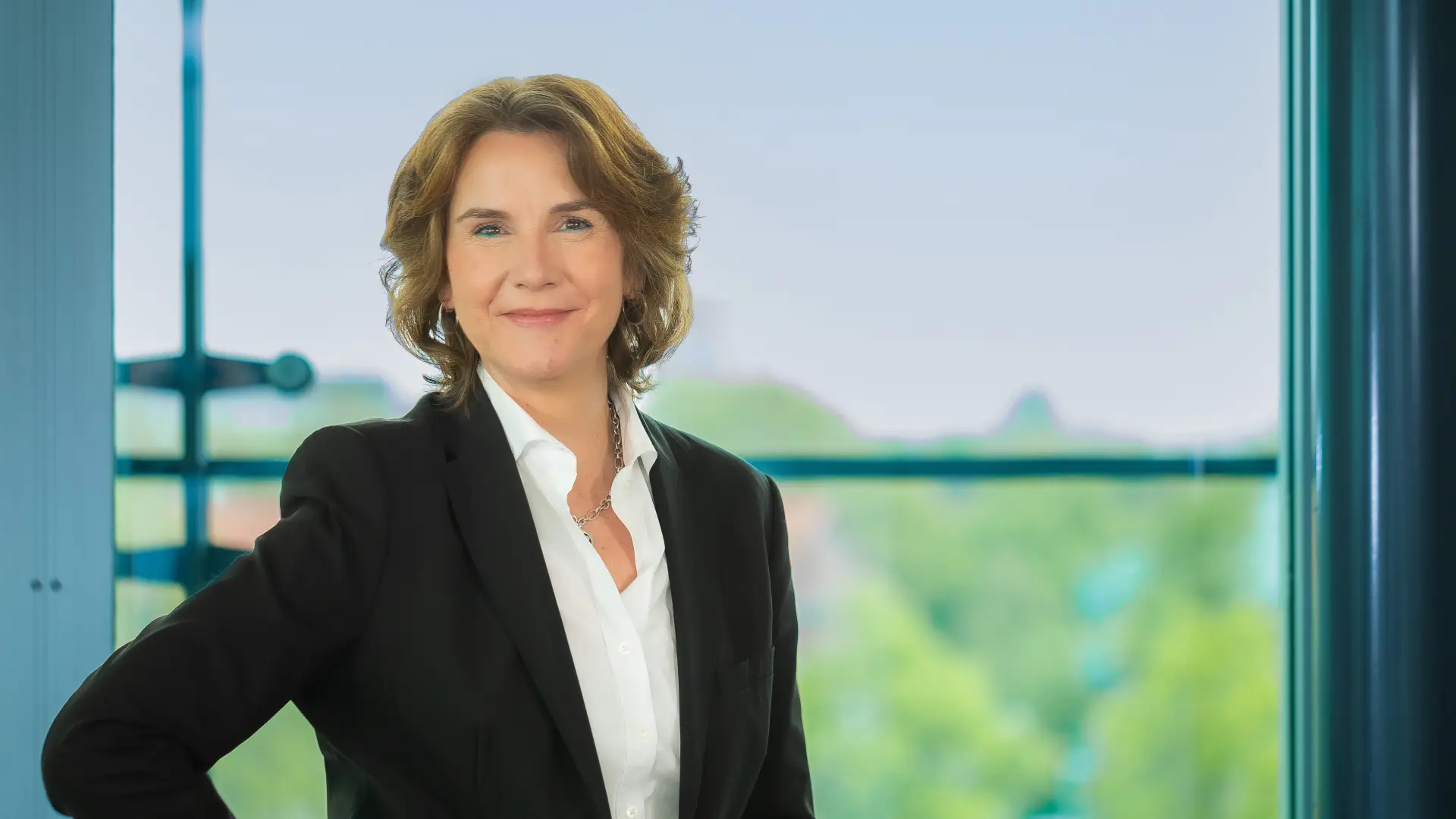
“We don't talk about entrepreneurial thinking as a mindset we hope people have. We talk about it as a capability we are responsible for building—through empowerment, through trust, through the freedom to decide locally.”
Henriette Viebig
Executive Vice President Brand & Communications at Körber
This is not only Körber’s conviction. Independent research points in the same direction, from two complementary perspectives.[5]
A study published in Revista de Gestão found that entrepreneurial orientation can be measured as a strong driver of innovation and organizational performance—especially when supported by an organization’s ability to learn.
A second study, published in Frontiers in Psychology, showed that employees’ entrepreneurial orientation depends less on individual personality than on the conditions created by the organization, including management support, appropriate rewards, and the freedom to act.
Read together, the evidence reframes the headline as more than a rhetorical flourish: entrepreneurial thinking behaves, empirically, like a trainable organizational capability—exactly what Empowerment, a cornerstone of Körber's ambition for the next decade, is designed to build.
At Körber, this understanding is reflected in how employee engagement is assessed and in the core themes of development dialogues and programs. Both systems focus on customer orientation, performance, value contribution, and decision-making—key components of entrepreneurial thinking and action.
The strategic implication
What the scientific studies and Körber activities demonstrate is the strength of the operating logic on which LIFE 2035 depends: an organization empowered enough that its people do not wait for permission to act in the customer's interest, and disciplined enough to take ownership of what happens next. The strategic framework simply gives this approach a name and a shared destination.
“Be the first to do the right thing at the right time.”
Kurt A. Körber
Founder of today’s Körber Group
For global industries shaped by rapidly evolving megatrends, faster technology cycles, and rising customer expectations, entrepreneurial thinking is not a trait people were or weren't born with, and it is not something you announce into existence with a campaign. It is a core skill that must be built site by site and decision by decision, through an integrated, cross-functional, and strategic approach.
Sources:
[1] McKinsey & Company, “The Big Pivot: Interview with Körber CEO Stephan Seifert,” accessed September 17, 2026, https://www.mckinsey.com/industries/industrials/our-insights/the-big-pivot-interview-with-korber-ceo-stephan-seifert; Stephan Seifert, “A Good Decision—Körber,” LinkedIn, accessed September 17, 2026, https://www.linkedin.com/posts/stephan-seifert-834516174_life2035-ai-software-activity-7455866151974211584-p1Sr
[2] Erich Hoch, “Bähren Pharma-Packaging Acquisition,” LinkedIn post, 2024: “Bähren is a perfect fit for our entrepreneurial spirit and cultural DNA,” accessed September 17, 2026, https://www.linkedin.com/feed/update/urn:li:activity:7268276559222853632/.
[3] Arungalai Anbarasu, “Körber Technologies: Future Strategy,” interview, 2024: “I place a strong emphasis on fostering a strong company culture,” accessed September 17, 2026, https://www.koerber.com/en/insights-and-events/koerber-technologies-future-strategy.
[4] Dr. Helena Garriga, “From silos to synergy: How ecosystems are shaping the future of manufacturing and logistics,” Körber article, 2026, accessed September 17, 2026, https://www.koerber.com/en/insights-and-events/ecosystem-strategy.
[5] Gomes, Seman, Berndt & Bogoni (2022), Revista de Gestão, Vol. 29, No. 1, pp. 39–54; Basheer, Sabir, Raoof, Hameed & Jabeen (2022), Frontiers in Psychology, Vol. 13, Art. 799149.
FAQ
What industry leaders need to know
Körber understands entrepreneurial thinking as a practical capability: the ability to make decisions and act under incomplete information while taking ownership of the outcome. It is not presented as a personality trait or as an inspirational phrase alone, but as a skill that can be developed across the organization.
Customers rely on a technology partner’s judgment when production is disrupted, markets shift, or decisions must be made without a ready-made answer. Entrepreneurial thinking helps Körber’s people act quickly, locally, and with the customer’s interests in mind.
Empowerment is one of the four central drivers of LIFE 2035, Körber’s long-term ambition to be the leading partner for the Life science, Supply chain, and High-tech industries. Entrepreneurial thinking gives that empowerment practical expression by helping people make decisions, take ownership, and create customer value at every level of the organization.
Henriette Viebig is Executive Vice President Brand & Communications at Körber. She is responsible for ensuring the brand's claims about entrepreneurial thinking are backed by verifiable examples rather than generic statements.
At Körber, culture is not a one-time program but something shaped through daily actions and collaboration. Its focus on trust, collaboration, and performance creates the environment in which people can challenge established answers, work across boundaries, and take responsibility for their decisions—making entrepreneurial thinking a shared way of working rather than an individual aspiration.
You may also be interested in:


Connect with us
Let’s talk about future-ready solutions for your business.
Contact