From silos to synergy: how ecosystems are shaping the future of manufacturing and logistics

ArticleEcosystems

5 min read

Industrial ecosystems are no longer optional. As digitalization, automation and evolving customer expectations disrupt traditional models, ecosystems offer the framework needed to deliver seamless, end-to-end value in an increasingly complex world. Dr. Helena Garriga, Group Executive Board Member and President Business Area Supply Chain, shares Körber’s perspective on how ecosystems drive impact and innovation.

Share

A row of parcels in a logistics facility

The ecosystem imperative

The global manufacturing and logistics sectors are undergoing profound transformation. Growing complexity, regulatory shifts, and rapid innovation demand fresh thinking as traditional stand-alone business models are no longer enough. The future belongs to those who connect, collaborate, and orchestrate value across technologies, partners, and customers.

An ecosystem is a dynamic network of independent yet complementary players that co-create interconnected offerings delivering more value than standalone solutions.

Dr. Helena Garriga, who leads Körber’s ecosystem strategy, describes, “Across the industrial landscape, we see a decisive shift toward networks and strategic alliances. No company, regardless of scale, can respond alone to the accelerating pace of disruption. Ecosystems are no longer theoretical—they are the new foundation for sustainable industrial leadership.”

The market forces driving ecosystem adoption

The move towards ecosystems isn't happening in isolation. “As global industries evolve, multiple forces are converging, forcing a new approach.” observes Dr. Garriga. These are:

  • Digitalization and automation: Companies are striving to move faster and operate smarter, but few can do it all on their own. Advanced digital tools, cloud services, artificial intelligence and robust cyber security are now essential—but rarely found under one roof.

  • Standardization and modularization: Businesses must now ensure their systems work well together. This requires new methods that make integration smooth and flexible, supporting ongoing adaptation and growth.

  • Low-cost competition: Global players face ever-tougher competition. Success now depends on delivering unique value, not simply offering the lowest price.

  • Service expectations: Customers want more than just products—they expect complete solutions and services that address every step of their journey. The focus has shifted to delivering results, not just equipment.


Ecosystem thinking is not just advantageous, but essential for long-term success.

50%+

More than half of the top 100 global companies in the S&P 500 have already built or bought into at least one ecosystem.¹

90%

Ninety percent of multinationals plan to expand their activities in business ecosystem models.²

1/3

By 2035, around one-third of global GDP will be orchestrated by cross-industrial ecosystems.³

What ecosystems mean to Körber

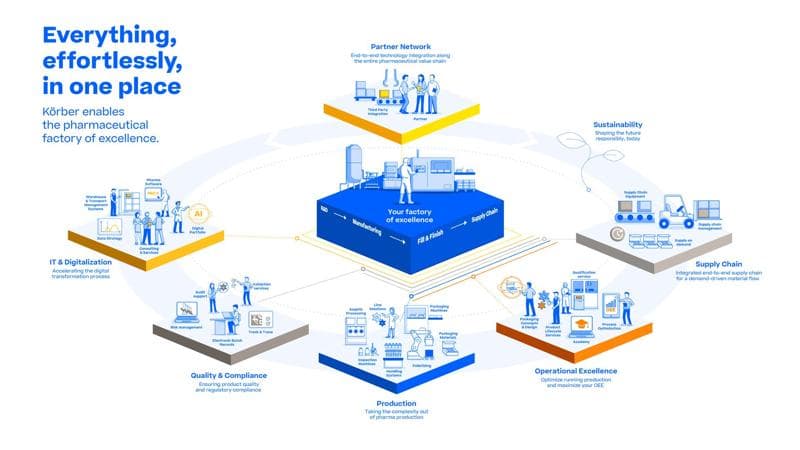
Körber integrates hardware, software, automation and services to address business challenges across the entire value chain. Three core differentiators set us apart in the industrial landscape:

Customer-centricity

We tailor solutions to meet specific needs, by integrating advanced technology and services into cohesive offerings that solve real-world challenges.

Internal collaboration

We achieve seamless integration of machines, software, logistics and industry expertise—combining our collective strengths to deliver comprehensive solutions.

Strategic partnerships

We build long-term collaborations with industry leaders like Microsoft, Franz Ziel and Geek+ that extend our capabilities and accelerate innovation.

Our ecosystem strategy: built for holistic value

Körber’s ecosystem model is designed to deliver end-to-end value through simplified operations. Our ecosystem solutions deliver four key benefits that traditional approaches cannot match:

  • Single point of contact: Customers work with one integrated team rather than managing multiple vendor relationships, reducing complexity and improving communication.

  • Faster time to market: Pre-integrated solutions and established partnerships accelerate deployment timelines and reduce integration risks.

  • Lower integration friction: Compatibility issues are minimized, simplifying the technical complexity customers face when implementing comprehensive solutions.

  • Fully connected experience: End-to-end value flows from initial consulting and technology deployment, through long-term service and support.


This model is particularly powerful in our supply chain collaborations, where we combine robotics and automation with logistics expertise. 

Helena Garriga headshot

“By drawing on expertise across our partner network, we help customers address challenges holistically—from inbound logistics through production optimization to outbound warehousing—all orchestrated through unified project management and support.”

Dr. Helena Garriga

Group Executive Board Member and President Business Area Supply Chain

Collaboration as a competitive edge

One of the clearest signals of market evolution is the rise of ‘co-opetition’—strategic alliances between companies that are traditionally competitors. Clarifying Körber’s position on this, Dr. Garriga explains, “We embrace cooperative competition, and see it as a powerful strategic advantage. This approach ensures we stay agile, relevant, and ahead in a rapidly evolving market."

Across each partnership, the goal is shared strategic ambition—not just tactical convenience.

Ecosystems in action: borderless and bold

Körber’s ecosystem approach comes to life every day—through our partnerships, integrated projects and customer innovation. Dr. Garriga underscores the point: “It’s when our vision, the right partners and ambitious customers align, that true transformation happens. We see it in our projects. The value is real.”

Our partner network includes leading companies from various industries. In automation and robotics, we work with companies like Geek+ and HAI Robotics to deliver advanced warehouse solutions. Our technology partnerships with Microsoft enable us to integrate cutting-edge software platforms into our manufacturing ecosystems. Through partnerships with companies like Franz Ziel, we extend our pharma capabilities, while maintaining our focus on seamless customer experience.

Looking ahead, Dr. Garriga believes industrial ecosystems will be characterized by several key trends:

  • Borderless collaboration: Future ecosystems will span industries, geographies and traditional competitive boundaries, creating new possibilities for value creation.

  • Agile reconfiguration: Successful ecosystems will enable rapid capability reconfiguration to meet changing market demands and customer requirements.

  • Human-centered design: Service, consulting and customer co-creation will be as critical as technology in defining ecosystem success.

  • Strategic necessity: Companies that fail to engage in ecosystem thinking risk being left behind by more collaborative competitors.

Building the future, together

Summarising Körber's perspective, Dr. Helena Garriga states, “We empower customers to navigate complexity, drive innovation and achieve sustainable growth through ecosystem collaboration. The companies that will lead tomorrow’s industries are those building these integrated capabilities today.”

Connect with Körber to see how we can shape the future—together.

Our ecosystem leaders

Dr. Helena Garriga, member of the Group Executive Board of Körber AG

Dr. Helena Garriga

Group Executive Board Member and President Business Area Supply Chain

Linda Spies headshot

Linda Spies

Manager Strategic Projects Marketing & Sales, Körber

Körber employee smiling

Get in touch

Speak to our specialists about our range of flexible, scalable, end-to-end solutions—tailored to you.