- Insights, stories & events
- Successful tech transfer with data analytics
How data management and analytics ensure a successful tech transfer
10 min read
Successful technology transfer depends on more than processes alone. Discover how data integrity, analytics, and collaboration drive consistent and compliant manufacturing.
Accelerate your process data analytics
How Werum PAS-X Savvy revolutionizes managing, analyzing, visualizing and reporting of your pharma and biotech process data
Challenges of tech transfer in pharma and biotech
Technology transfer of products and/or processes involves many steps and often multiple parties are involved. Since all parties might have a different understanding of what technology transfer is, it is essential to establish a common understanding of terms and define the roles and responsibilities of each member involved. This avoids any confusion or misunderstanding and maintains clear communication throughout every step along the way.
A major requirement is data migration. This can be a challenging process during tech transfer. While ‘transfer of data’ might sound simple, data can be lost due to connection failure and is challenging to retrieve. Although the data is available, it is not used and is difficult to transfer because it is not well structured, not connected, and not contextualized. This is the current bottleneck of technology. Therefore, it is advisable to transfer the data in increments to minimize risks.
There are a couple of challenges during the tech transfer:
- Completion of data collection
The early stage of product development involves many trials and errors. In addition, there is an immense influx of data during the research and development process. Stakeholders need to record all relevant data from these steps and process massive amounts of data with proper methodology and guidance. Without appropriate recording systems, the recorded and available data gets not used in its entirety, or, as a result, the analysis is not statistically sound. The possible insights stay undiscovered in the recorded data, not exploited for further analysis or calculations, and knowledge may be lost. - Data correctness and data integrity
In addition to data completeness, the method of the recording should ensure the correctness and integrity of data. Important are the ways data is being recorded, the verification of data during the recording process, the tools for recording, i.e. digital versus manual etc. - Forming data in organized structures and retrieving the correct data
The data structure is crucial, as this helps stakeholders understand where the information to be used is located and acquire the correct data for usage. Conversely, data with unorganized structures offers little value. In the pharma and biotech industry, the structure of data can be complicated and requires input from experts who plan how to collect the data and organize it in a meaningful and logical way.
What is the impact?
Without the above mentioned data quality, the recorded data will be insufficient, incomplete, or incorrectly connected. Thus, the conclusion can be misleading and wrong, causing a development of the process in the wrong direction: quality loss, batch loss, and economic loss can occur and wrong assumptions can be made, which critically affects the safety and quality.
Moreover, this causes complications during regulatory audits and in getting FDA approval. This might delay receiving approval by regulatory bodies or a product release. To address this issue, production management systems like Werum PAS-X MES can ensure data integrity, process control, and overall quality of the product or process. However, if tech transfer is not appropriately managed, it may result in high costs, production process redevelopment, and a product launch delay. Hence, the quality of each process along the way and transparent and open communication between all parties play a critical role in the overall success.
What are essential aspects that need to be considered for technology transfer?
The following key concepts are critical for a smooth technology transfer:
- Risk assessment and developing a mitigation plan before technology transfer:
At the very early stage, all potential risks including risk assessment during process characterization must be evaluated to avoid any issues that might occur later. Centralized documentation and cross-functional teams can help mitigate risks and attain efficiency that results in a successful technology transfer. - Robust information exchange: The information exchange needs to be transparent and the information easily accessible. Both parties, sending and receiving sites, should be able to locate and access the information. Additionally, the data should be accessible only from persons with the correct authorization.
- Transfer of analytical assays: It is vital to ensure that all analytical methods are correctly validated and adequately transferred. Thus, a reliable medium of recording these processes should be in place to trace all evidence and information, and the processing of the raw data needs to be transparent and statistically sound.
- Small scale verification at the receiving site: Starting from a small scale helps assess the potential impacts of the process at the receiving site. Small-scale verification checks the accuracy of the process and determines the gap of the process, if any. This ensures the risk-averse approach to understand the readiness of the receiving site.
- GMP runs: This is the last step in the process validation and is required to confirm that the technology transfer was successful.
It is crucial to assess all potential risks that might occur during the process scale-up to be able to mitigate them in due course. Moreover, a key element within the risk assessment is the equipment/material handling, as the processes might vary for different facilities.
Consistency in manufacturing process quality is the key to creating effective products. Therefore, consistent and controlled procedures for tech transfer and for running the processes, assurance of clear documentation of product knowledge and assuring robust process and identification of the Critical Process Parameters (CPPs) and the Critical Quality Attributes (CQAs) are essential for a smooth and successful transfer.
Data management and analytics
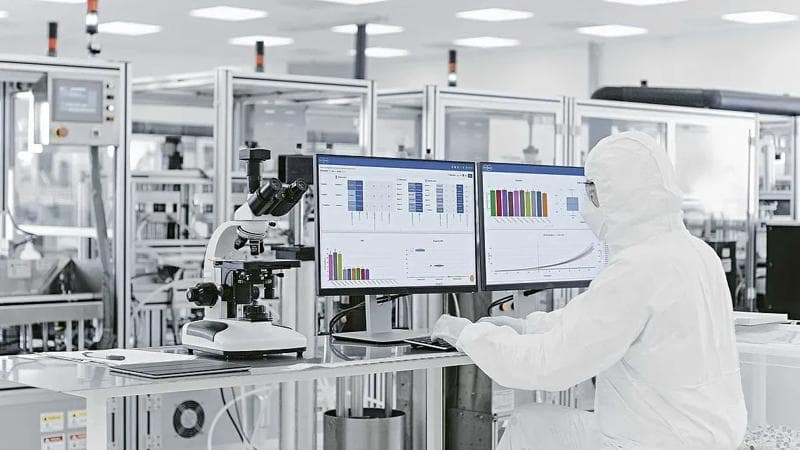
Data management helps record, store, protect, validate and contextualize data. It deals with the end-to-end lifecycle of data. As a result, data management minimizes the risks and costs of regulatory non-compliance. It provides data accuracy without ambiguity or conflict while avoiding miscommunication along the process of tech transfer.
With a good collaborative data-analysis platform, such as Werum PAS-X Savvy, companies can consolidate the data during R&D, process characterization, manufacturing and validation, and use all relevant data for commercialization. This is important because all process steps, deviations, and parameters need to be accurately processed – as mentioned earlier – to ensure quality and reliability of the results and process decisions.
Additionally, most pharma and biotech companies are struggling with large amounts of unstructured data, and thus it is difficult to use big data for future analysis. This is where data management comes into play. Some platforms offer the capability to consolidate data and allow data to be fed to analytical data platforms to improve production and performance. Other software solutions offer statistically sound, user-friendly, and fast analysis of the data.
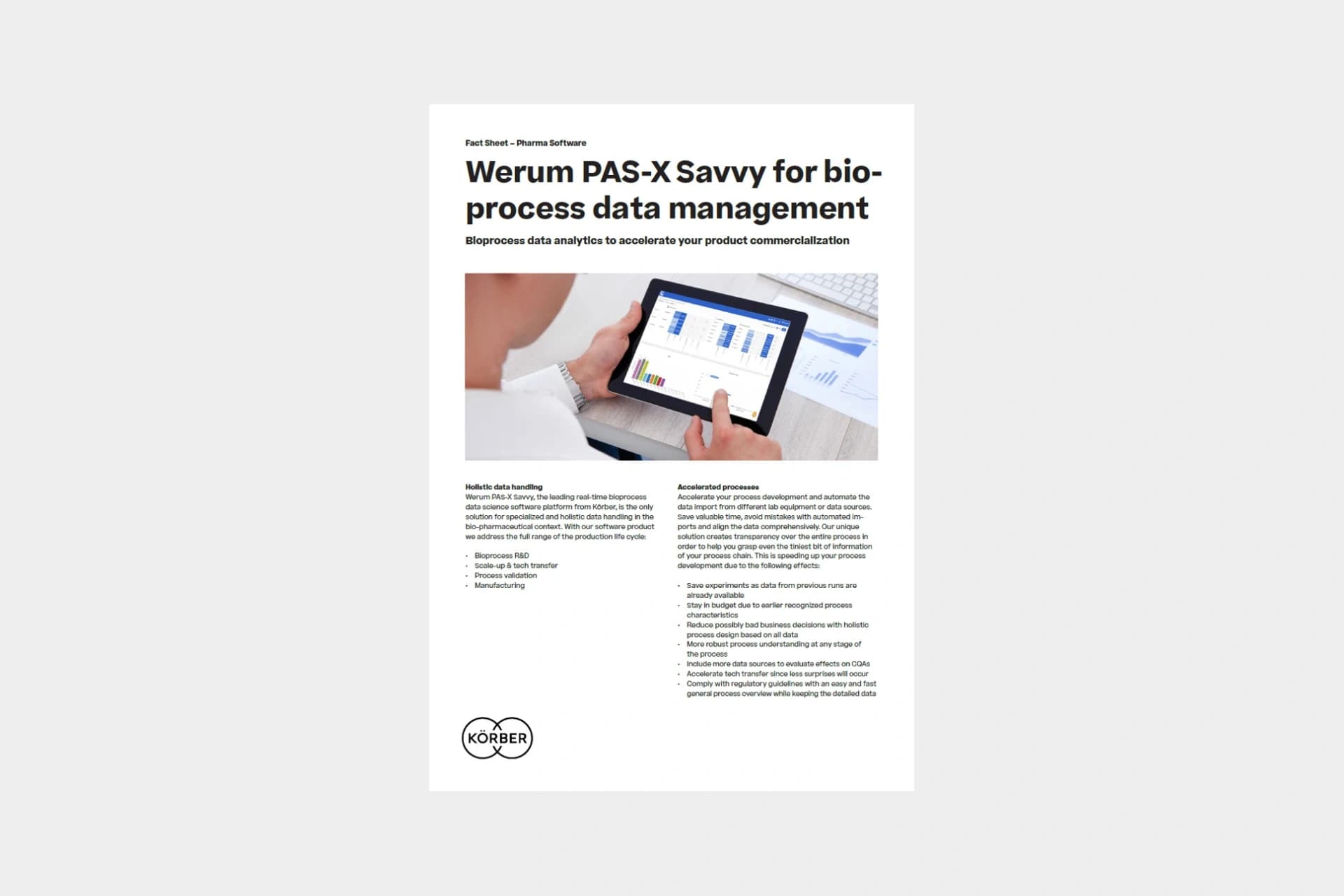
Werum PAS-X Savvy for bioprocess data management
Bioprocess data analytics to accelerate your product commercialization.
You may also be interested in: