- Insights, stories & events
- Körber-Ferring Pharmaceuticals future of manufacturing
How Ferring Pharmaceuticals stepped into the future of pharmaceutical manufacturing with Körber
4 min read
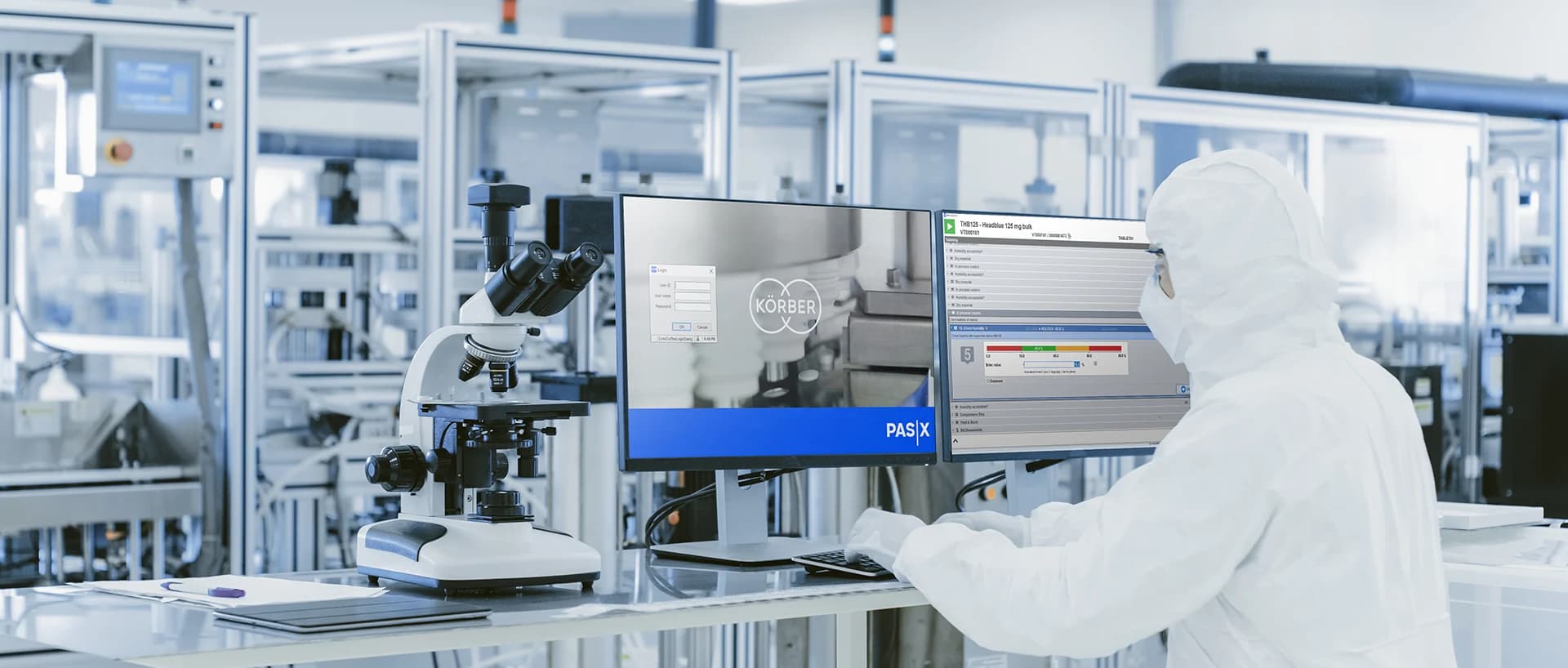
In a recent visit from Ferring to our consulting experts at our site in Karlsruhe , we have talked about the introduction of Electronic Batch Recording (EBR) at their site in Kiel, and how it was paramount for their digital transformation. But is this a concept familiar to all?

"Körber were the only ones who showed us the entire plan from the beginning, and by convincing us during this time to go from paper to EBR, we reduced production errors by around 25% and paper-based errors almost completely by a 100%."
Hartwig Hönerloh
Associate Director of MES Management of Ferring Pharmaceuticals
By starting in the early stages of the project with the Process Landscape™ methodology, Ferring was able to take full advantage of its benefits. This helped them to structure the work and prepare for the execution, leveraged by a detailed, reliable, and comprehensive picture of the state of the system and its potential for improvement.

The close relationship between both teams and the transparency of the process, was something that Hönerloh considered to be crucial for the success of the project “the working style was, from the very beginning, very open and positive and in the meantime, we performed a close collaboration and a close teamwork.”
We value your privacy.
We require your consent. This video is hosted by YouTube, a service of Google LLC (USA). When you watch the video, YouTube receives your IP address, can store cookies on your device, and link this activity to your user account. For this, you must accept YouTube cookies in the Cookie Settings. You can also select 'Accept all Cookies' and thereby consent to further cookies that allow us to make the website more user-friendly, analyze user behavior, and show you personalized advertising on other websites. You can revoke your consent at any time via the cookie settings link in our footer. Further information can be found in our Privacy Policy.
Pharma 4.0 and the path to digital transformation
The implementation of a single EBR it’s not a one and done process, and Meyer lays down the groundwork for the future “I think the next steps going forward are to implement EBR for the following production lines as well as helping Ferring to find proper solutions for implementing their own process in a standard MES system,” and this is what Hönerloh appreciated the most “to have a reliable partnership or reliable company which can support us also after finalizing the project, because when switching from a project to a life cycle, you also need support going forward.”
Nothing would have been possible without the fantastic collaboration and trust from Ferring Pharmaceuticals and their team, and the kind words of Hönerloh “I personally recommend calling Körber and asking for support in a digitalization project,” is a big praise to the work of our consulting experts.
If you want to know more about this story, we have prepared a case study for you, where we share other tangible and measurable results. You will get to know the ins and outs of how Pharma 4.0 can really support your business thrive.
Ready for the future? Download the free case study below.

Case Study Ferring Pharmaceuticals
Discover how Ferring in Germany mastered a milestone on the path to digital manufacturing.
You may also be interested in: