- Insights, stories & events
- AI-powered pharmaceutical inspection
Increase quality and cut costs: AI-powered pharmaceutical inspection
4 min read
Discover AI-powered inspection solutions for the pharmaceutical industry. Boost quality, reduce costs, and minimize false rejects in your production process.
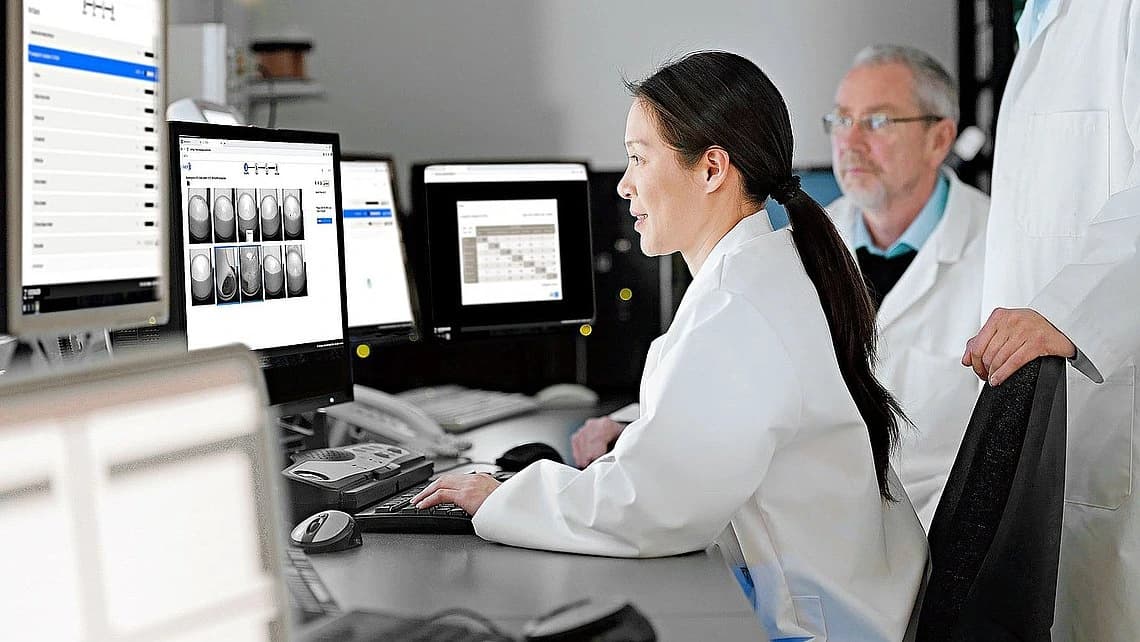
The pharmaceutical industry faces unique challenges in manufacturing and production processes – especially in times of rapid digital technology transfer. One critical process in parenteral pharmaceutical manufacturing is the visual inspection of primary packages such as syringes, vials, or ampoules. In this process, potential product defects, impurities, or contaminants must be detected in each individual product, hence the term: “100 percent inspection”.
The automatic visual inspection (AVI) is a common practice in the industry. This inspection method however brings along false reject rates (FRR), which can lead to costly re-inspections.
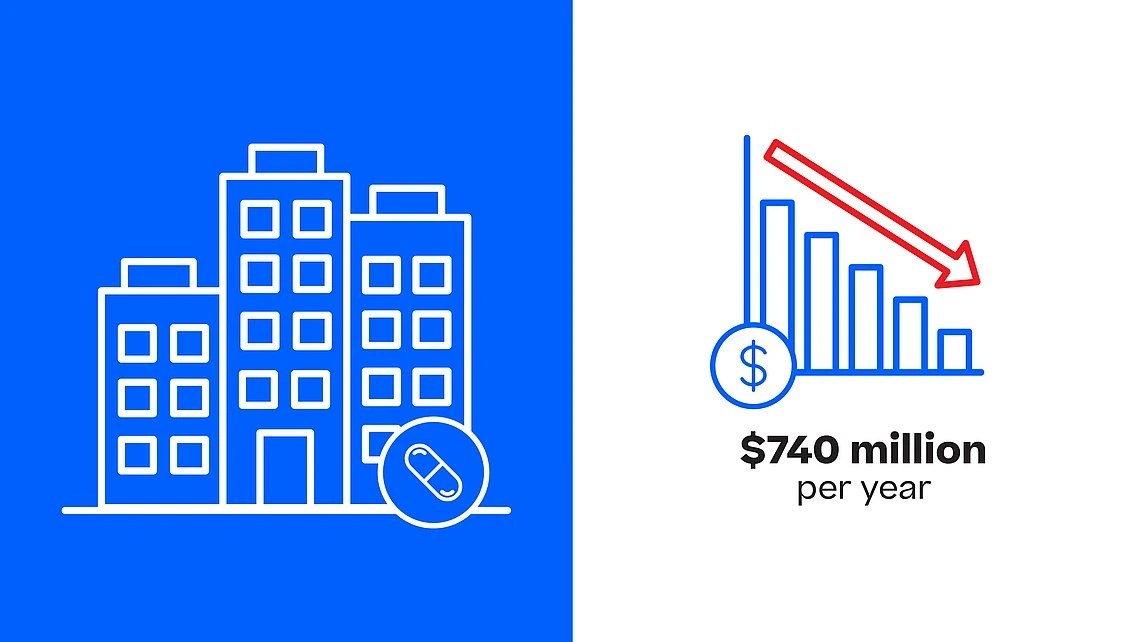
Ensuring reliable detection results with traditional vision tools requires at least 5 to 15 product samples per defect and configuring up to 18 cameras per machine. This process is expensive, time-consuming and error-prone, costing the pharmaceutical industry up to $740 million per year (source for data) due to false reject rates that can range from 1 to 45 percent, depending on product complexity. In addition to the costs associated with re-inspections, false reject rates can lead to delayed product releases and missed market opportunities.
Getting started with AI-supported inspection
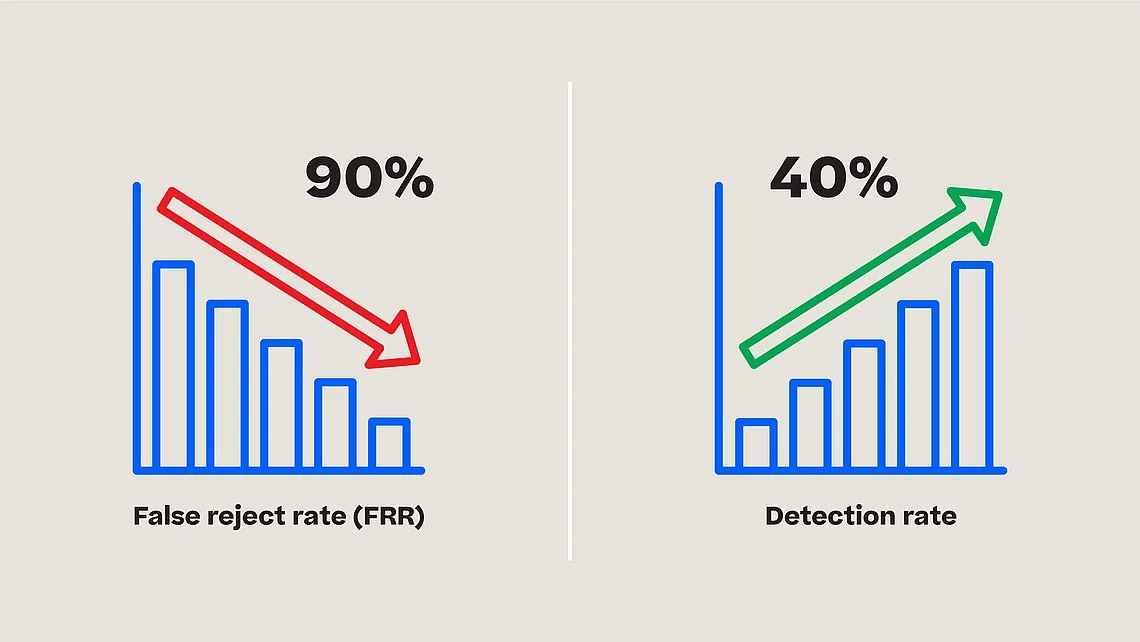
To counteract this, significantly reduce costs and achieve improved quality in the long term, AI-supported inspection processes are future-proof and should be part of companies' data and AI strategy. Instead of measuring physical values, AI models scan for good and defect patterns in the product, which significantly increases the detection rate (DR) while minimizing the false rejection rate. This approach enables a more accurate and efficient inspection process by detecting even the smallest deviations or defects from the norm that may not be visible through traditional, physical measurements.
For this purpose, AI models are trained with large data sets, whereby the quality and relevance of the data are crucial for the accuracy and effectiveness of the resulting models. To ensure the highest quality of training data, experts with in-depth knowledge of pharmaceutical products and manufacturing processes are involved in the creation. They identify the relevant defects and impurities that need to be detected and develop the criteria for labeling the data – always with the individual production line in mind.
AI models are trained with advanced algorithms that enable them to recognize patterns and make accurate predictions, based on the input data. The trained models then are integrated into automated visual inspection (AVI) systems to detect defects and contaminants even better than with the conventional approach, by keeping up the same inspection speed.
Faster time to market and cost reduction through increased efficiency
You may also be interested in: