- About us
- News & Press
- Packaging Qualification Services
From development to market readiness: Körber offers Packaging Qualification Services from a single source
With its Packaging Qualification Services, Körber enables its pharma customers to examine the optimal product protection of their secondary packaging using recognized pre-tests during the qualification phase.
Allschwil, May 2022.
In the development, implementation and qualification of pharma-compliant secondary packaging, in addition to precision and maximum product protection, smooth integration of the packaging solution into production processes and a fast time-to-market are also important. With Körber's Packaging Qualification Services, product launches can be accelerated and additional costs due to checks can be avoided.
In recent years, Körber AG’s Pharma Packaging Materials Business Area has continued to broaden its expertise in the area of packaging development at its locations in Europe and the USA. Since mid-2021, Körber packaging specialists have been offering their pharma customers, at the locations in Allschwil in Switzerland, in Ejpovice in the Czech Republic and in Camden, NJ, USA, the opportunity to develop their secondary packaging in accordance with uniform standards in ‘Packaging Innovation Centers’. One particular offering is Packaging Qualification Services.
„With our Packaging Qualification Services, we can give our customers the opportunity to quickly and flexibly test a wide range of properties and behaviors of their folding boxes and to draw valuable conclusions for the optimization of their packaging,“ explains Patric Buck, Head of Innovation Packaging Materials in Körber‘s Pharma Business Area. „This saves them the sometimes very time-consuming search for available external testing laboratories.“ Körber offers this service regardless of whether the folding boxes have been developed in-house or by another provider.
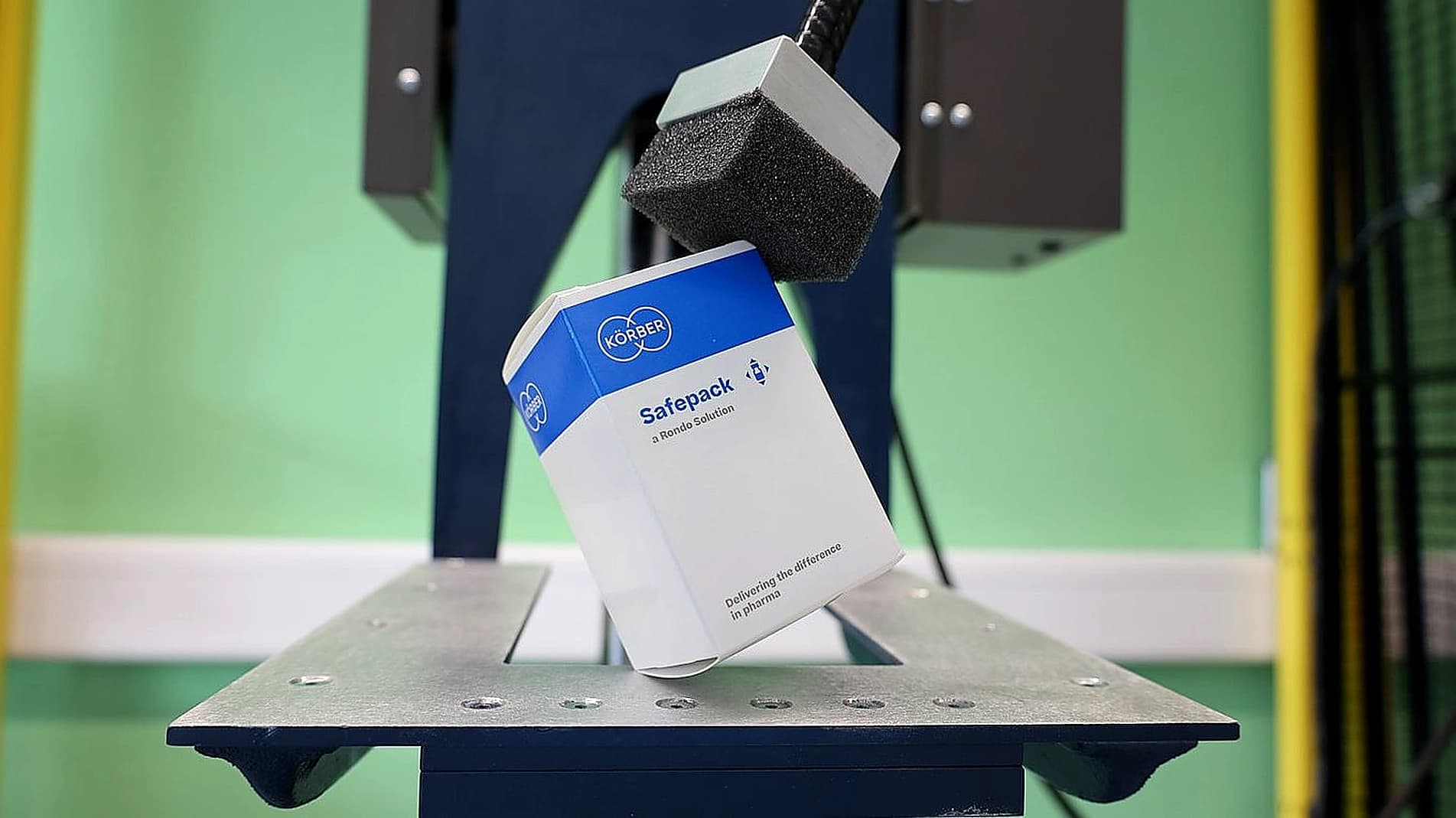
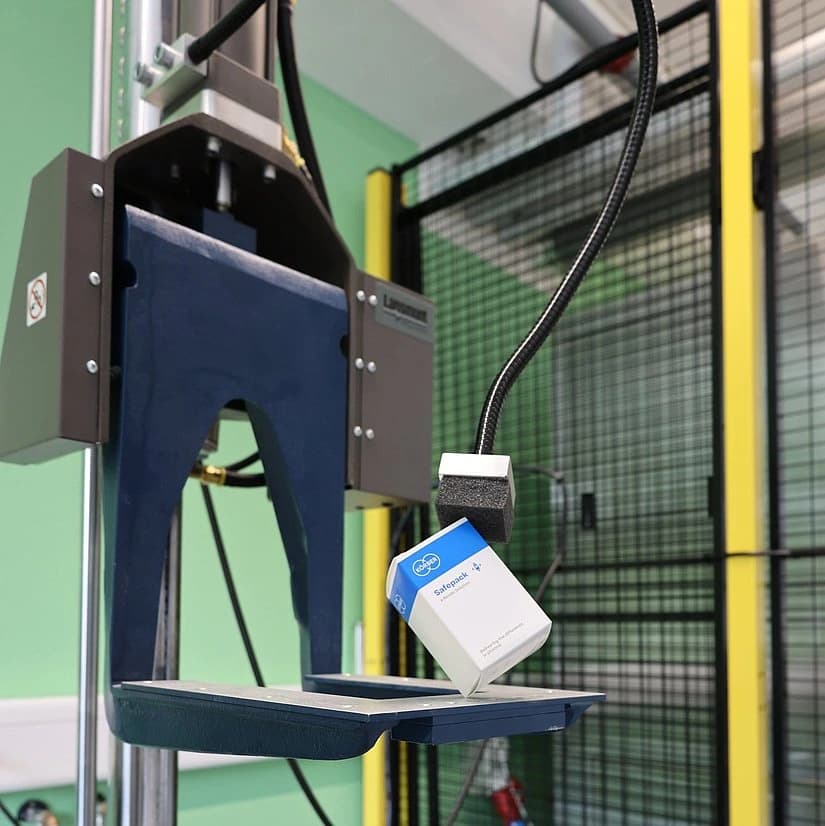
Among other things, the Packaging Qualification Services offered by the packaging experts include tests on the resilience of the packaging and on product protection during production and shipping. By simulating the packaging free-falling onto its corners, edges and surfaces from a defined height, pharma companies can demonstrate that the packaging is intact after the drop and that the product is not damaged. Tensile and compression tests are carried out to prove that adhesive bonds can withstand defined tensile and compressive forces and that perforations tear cleanly and in a clearly defined manner. In addition, the forces required to open the packaging or perforation can be tested. Abrasion tests are carried to test the resistance of cardboard surfaces to mechanical stress, liquids and lubricants.
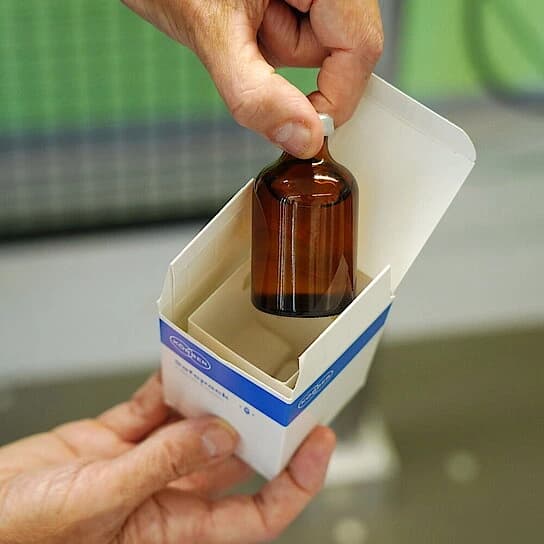
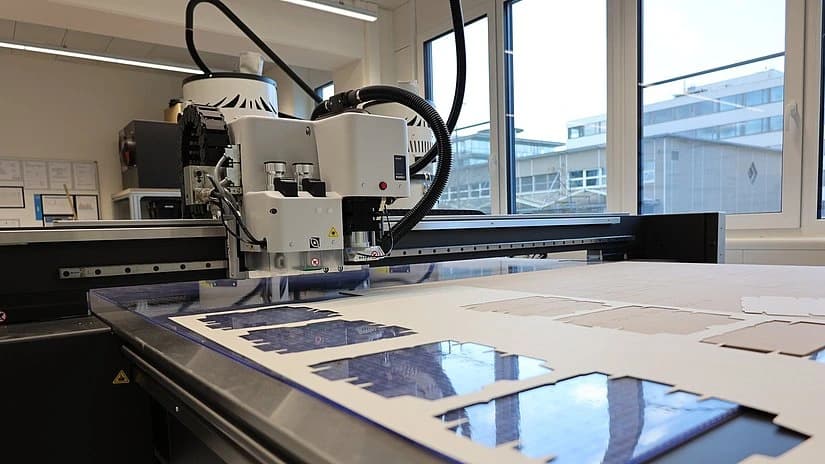
A climate simulation can also be used to test the behavior of folding boxes under specific environmental conditions. At temperatures of -75 °C to 180 °C and a relative humidity of 10% to 98%, extreme transport and storage temperatures, for example of Covid-19 vaccines or in tropical regions, can be simulated, as well as the aging of a product over its life cycle. Tests such as resistance to creasing, friction coefficient and erecting force provide information on the machinability of folding cartons on high-performance packaging machines. The resistance between the individual cardboard blanks, the coefficient of friction, has an effect on the smooth feeding of the folding box blanks into the system. In addition, the creasing resistance defines the force required to fold the blanks and to bend and flip the tabs. These tests can therefore ensure that blanks from different suppliers are also reliably suitable for use in the machines, without time-consuming adjustment of system parameters.