Kinan Maatouk, Körber site: Lüneburg, Germany
I have been working for Körber in Lüneburg for more than ten years.
Here, we develop the leading software solutions for the pharmaceutical and biotech industries.
These solutions enable our customers to digitalize their production processes.
They are known as Manufacturing Execution Systems, or MES for short.
Over the years, I have had the opportunity to work in various areas, and my responsibilities have grown step by step. Today, I lead digitalization programs and projects for customers throughout the EMEA region and also globally, including some of our largest and most complex pharma programs.
Many of them operate with limited resources and are implementing an MES for the first time.
This has a significant impact on the way we work together.
Because implementing an MES is far more than a software project.
It changes processes, ways of working and responsibilities.
You are not only installing a system.
You are changing how people work every day.
In recent years, customer expectations have changed significantly.
Instead of highly customized solutions, many customers increasingly ask for standard solutions, proven implementation approaches and a strong ecosystem around the product.
So we asked ourselves:
How can we align our solutions more closely with evolving customer needs while continuing to draw on the combined expertise of our organization?
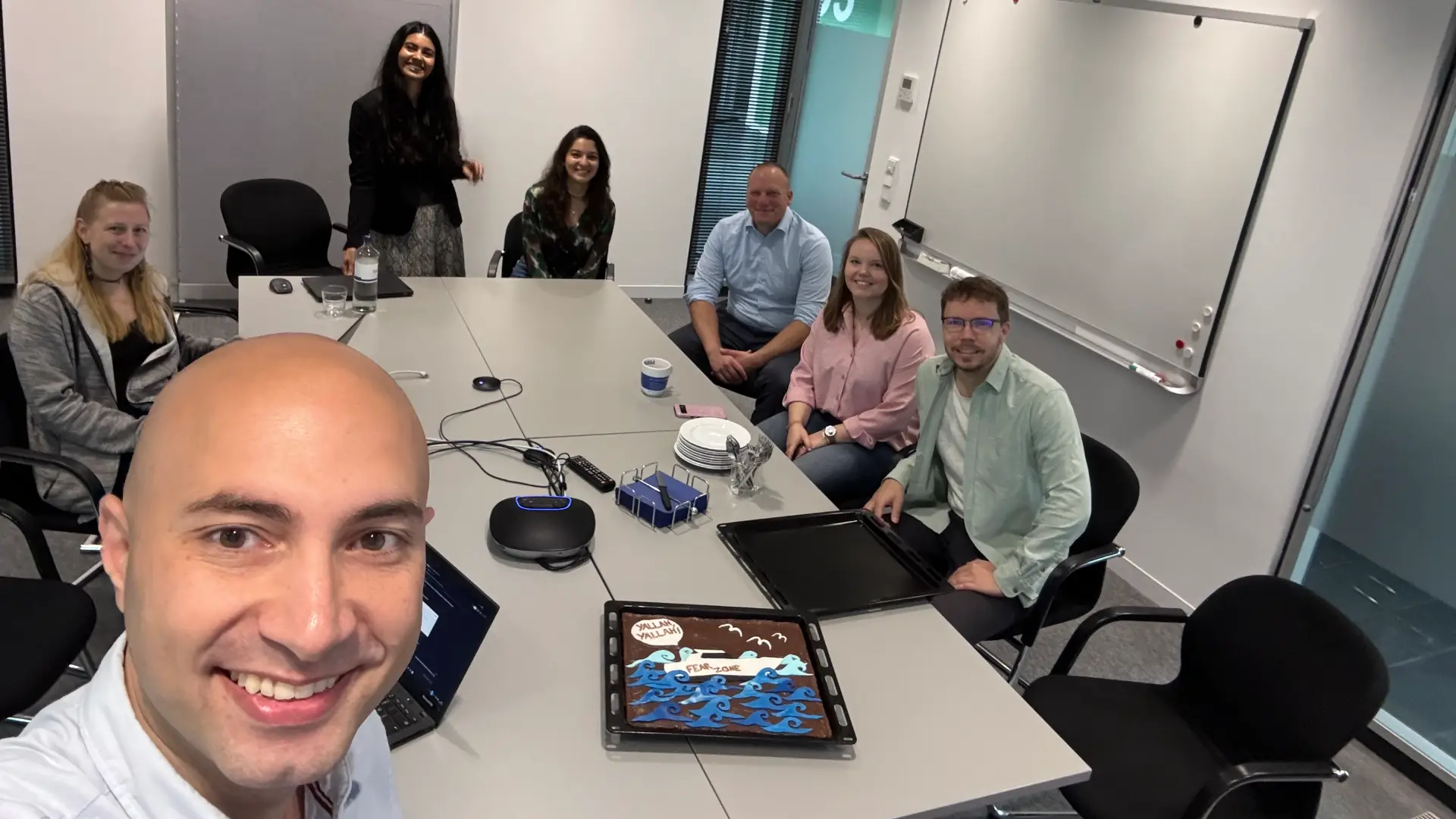
Together as a team, we developed what we call the “speedboat principle”: an agile and focused way of working that enables speed without losing sight of quality, commercial responsibility or our company’s targets and goals.
We rethink how we deliver programs and projects, simplify wherever possible and stay close to the customer.
We empower the team to make decisions earlier, react faster, learn continuously and work closely with Sales and the wider organization.
Speed matters, but speed alone is not the goal.
The goal is to deliver meaningful customer value faster while contributing to Körber’s strategic and business objectives.
The impact of this new way of thinking soon became clear:
The more closely the team aligned and the stronger the mutual trust became, the faster and better our results were.
That became the real success factor.