- Insights, stories & events
- Customer roadmaps
Developing roadmaps for customers
3 min read
Körber Technologies takes a proven approach when developing its customer roadmaps. This starts with a sound analysis of the current situation, from which an individual plan for achieving the goal gradually emerges.
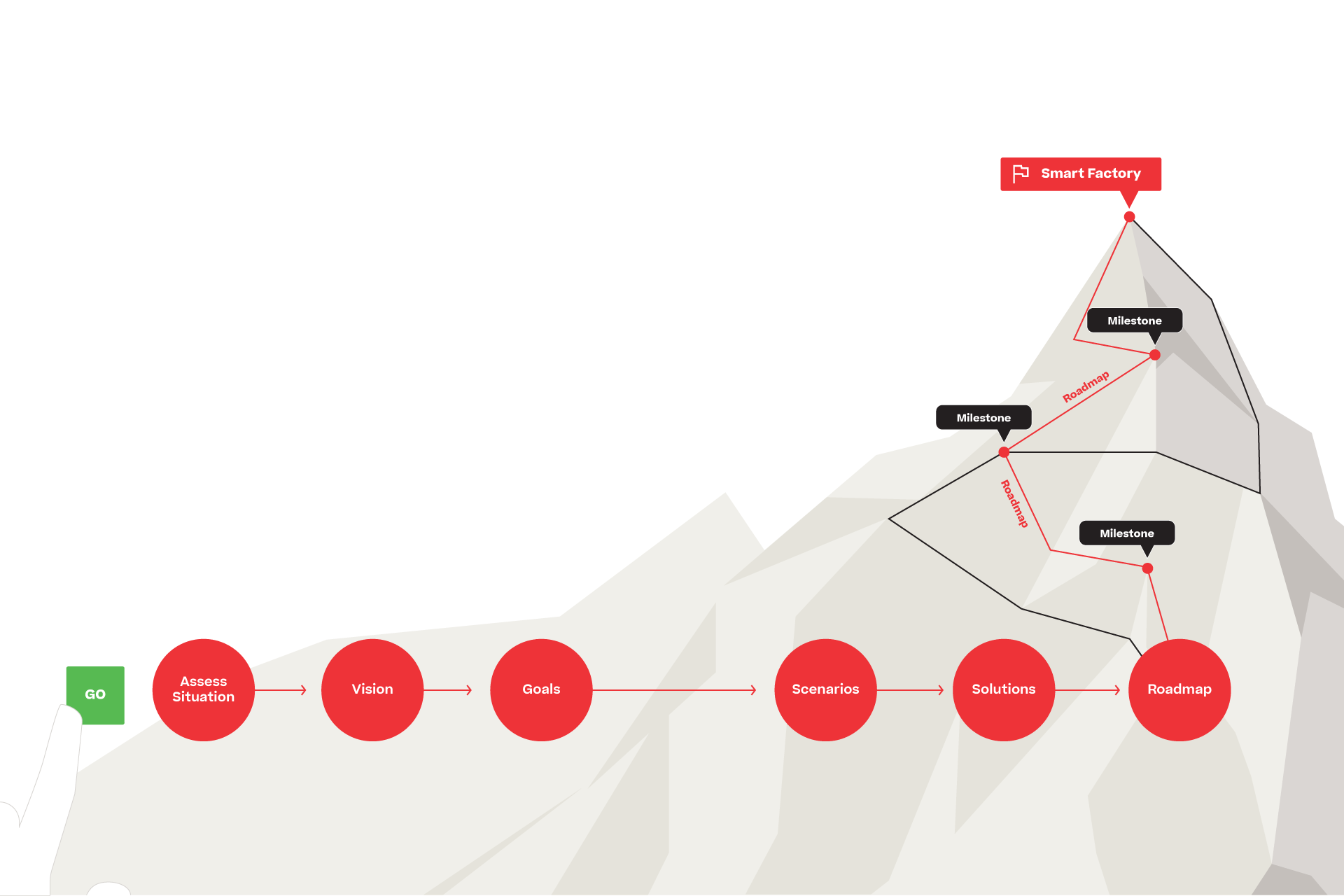
Finding the way together
The approach integrates an in-depth analysis of the “as-is” situation with vision and strategy concepts, milestones and KPIs as well as specific requirements for various application scenarios and the selection of suitable solutions. “It all adds up to a clear roadmap that is precisely tailored to a company’s needs and allows it to chart a path forward immediately, continually reviewing its progress based on solid data,” says Heller.
"As-is" situation
An in-depth analysis documents the organization, competencies, IT/OT and digital maturity level as well as production processes and technologies used.
Vision
Vision and strategic initiatives set the direction for expanding or rebuilding what already exists with the goal of decisively improving the value stream.
Goals
To define measurable goals, strategic initiatives are linked to management KPIs and translated into concrete measures.
Scenarios
User stories describe the specifically desired form of interactions between people, machines and processes with a focus on the end user.
Solutions
After defining the future working practice models based on the user stories, we select the appropriate solutions for realizing the respective goals.
Roadmap
The end result is a concrete schedule with firmly defined milestones. This provides the basis for the implementation phase, which can then begin in the individual project areas.
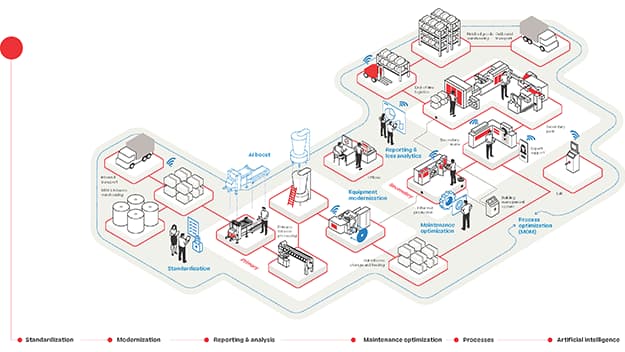
Standardization of processes and machine settings allows companies to establish best practices and avoid errors.
Modernization of equipment offers further scope for standardization and obsoles-cence prevention. Data interfaces – the foundation of Industry 4.0 – allow companies to exploit all the advantages of digitization.
Reporting & analysis continuously ensure complete knowledge of every process, line and plant based on total performance transparency. This motivates and supports teams when setting goals.
Maintenance optimization based on individual requirements increases machine performance and reduces costs by ensuring the ideal configuration of individual maintenance modules in conjunction with CMMS software.
Processes are optimized via the demand-driven introduction of further MOM modules for production (MES), quality (QMS) and warehouse management (WMS). This improves the overall performance of the production facility.
Artificial intelligence enables operators to take the next leap forward from reaction to prevention. It ensures that machines run optimally on a permanent basis and adapt automatically to new conditions.
You may also be interested in: