- Insights, stories & events
- Residual Mail
How to eliminate the Residual Mail bottleneck
5 min read
From manual bottleneck to automated workflow with AI-powered identification, labeling, and sorting.
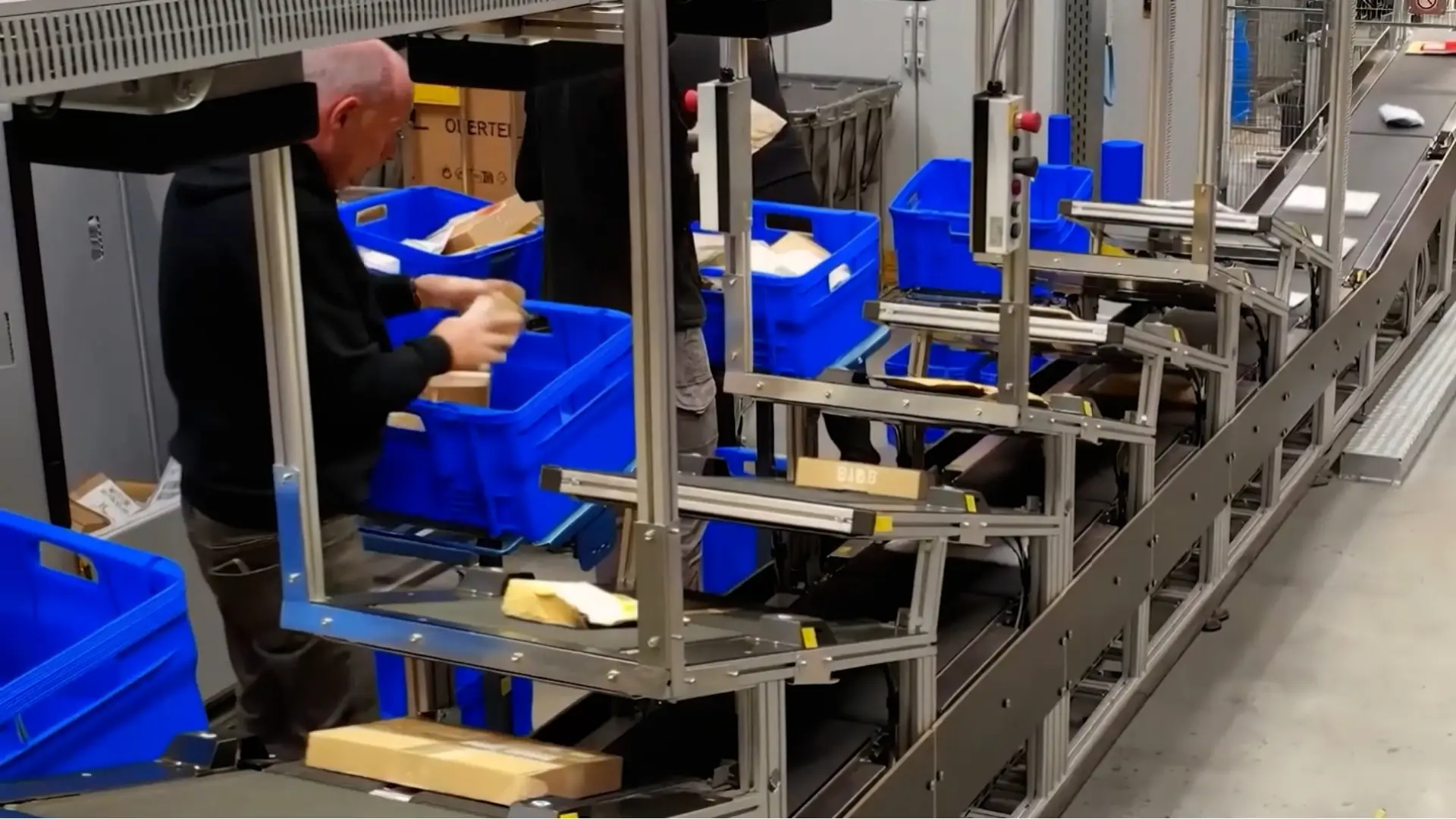
As postal and CEP operators continue to automate their sorting centers, one critical processing step has remained stubbornly manual: residual mail. Mixed mail streams, non-standard formats, and irregularly shaped items, and the growing volume of small e-commerce parcels often fall outside conventional automation processes requiring manual handling and creating operational bottlenecks, increasing labor requirements, and limiting overall sorting efficiency.
Today, however, advances in automation and artificial intelligence are making it possible to address this long-standing challenge.
The Hidden cost of residual mail
Residual mail is among the most complex segments of mail processing. Unlike standard letter and parcel flows, these items often fall outside the capabilities of conventional sorting systems and require manual intervention.
The challenge has become even more pronounced with the continued growth of e-commerce. Service providers are increasingly handling large volumes of small parcels, polybags, and flats that move through mail networks rather than traditional parcel hubs. These items often fall outside standard automation processes, causing them to enter manual residual streams and creating additional operational complexity.
Processing residual mail demands not only labor but also experience and operational know-how. Employees must understand sorting logic, delivery routes, postal codes, and local processing requirements while maintaining a high degree of accuracy in repetitive tasks. This dependency on specialized knowledge increases operating costs, creates training challenges, and introduces the risk of human error.
As labor shortages continue to impact postal and CEP organizations worldwide, automation is becoming increasingly important for maintaining operational efficiency and service quality.
Closing the automation gap
Körber developed the Residual Mail Sorter (RMS) to bridge the gap between automated processing and manual handling. Rather than replacing existing sorting infrastructure, the RMS extends automation to items that have traditionally required manual processing, enabling them to enter automated workflows.
The system handles a wide variety of formats within a single process, including postcards, letters, flats, newspapers, and small parcels.
Key benefits include:
- Gentle handling through flat transport and horizontal conveyance
- Reliable processing across mixed item types
- Fewer processing exceptions
- Reduced manual intervention
Combining semi-automatic induction, intelligent identification, automated labeling, and highly flexible sorting, the RMS transforms residual mail from a labor-intensive exception process into a streamlined automated operation.
AI-powered identification and intelligent labeling
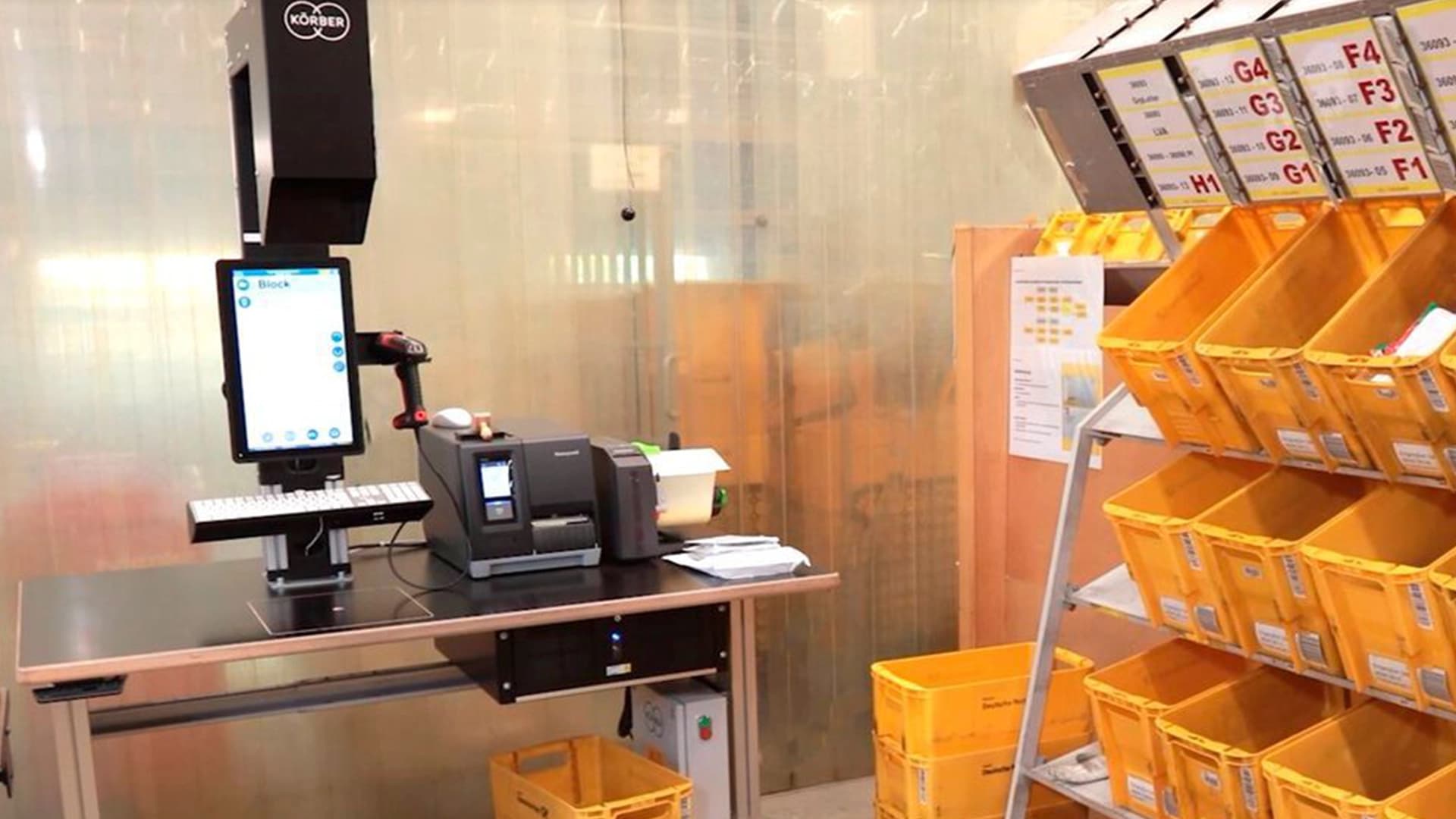
The process begins at the induction stations, where operators simply place items onto the conveyor. From that point onward, the RMS automatically scans, measures, and identifies each shipment using Körber's AI-powered image recognition, address reading, and OCR technologies.
In the identification section, a volume measurement system determines the precise dimensions and position of every item while in motion. An integrated label printer generates dynamic routing data for downstream processing.
The Körber VarioPick robotic labeling system then applies the label automatically. Capable of handling more than 3,600 items per hour, the robot uses advanced surface adaptation technology to reliably apply labels to uneven surfaces and mixed-material shipments. Precise label placement keeps critical information, such as valid delivery addresses, visible while automatically covering outdated data, including obsolete barcodes.
The newly generated label contains all information needed for automated downstream sorting and can also provide route-specific guidance to support delivery personnel in the last mile.
Flexible sorting for maximum adaptability
Once labeled, items enter the sorting section, where vertical diverters direct them to configurable destinations. The RMS offers two outlet concepts: paired outlets positioned on both sides of the transport path and high-capacity outlets that enable direct sorting into trays. Because there is no fixed limit to the number of outlets, service providers can configure the system to meet a wide range of operational requirements.
This flexibility allows postal and CEP operators to align the solution precisely with existing workflows while maintaining the scalability required for future growth.
Increasing throughput while reducing complexity
With a processing capacity of up to 7,000 items per hour, the RMS significantly exceeds the performance of traditional manual sorting operations.
By automating reading, labeling, and routing decisions, the system reduces dependence on specialized sorting expertise while improving consistency and accuracy. The system embeds operational knowledge directly into its logic, lowering training requirements and helping organizations maintain high sorting quality regardless of workforce experience levels. The result is a more resilient operation with reduced labor dependency, fewer sorting errors, and improved overall efficiency.
Built for today's operations and tomorrow's growth
One of the key advantages of the RMS is its modular architecture. Customers can tailor the system to their specific throughput requirements through:
- Six to ten induction stations
- One or two robotic labeling systems
- Flexible outlet configurations
- Direct tray sorting for high-volume destinations
- Scalable sorting layouts based on available floor space
This modular approach allows postal operators and CEP providers to optimize capacity, footprint, and functionality without compromising future expansion opportunities.
Seamless integration into existing operations
For many organizations, replacing large-scale sorting infrastructure is neither practical nor cost-effective. The RMS addresses this challenge through seamless integration with existing sorting environments.
Whether service providers deploy it as part of a modernization initiative or incorporate it into a new facility, the solution complements existing workflows and enables operators to build on their current sorting infrastructure. Service providers can extend automation where it is needed most without disrupting established processes.
Turning residual mail into a competitive advantage
Residual mail has long been viewed as an unavoidable challenge within automated mail and parcel operations. With the Residual Mail Sorter, that perspective changes.
By combining AI-driven identification, automated labeling, flexible sorting capabilities, and seamless integration, the RMS transforms residual mail handling into an intelligent, scalable, and highly efficient process.
Organizations benefit from:
- Higher productivity,
- Fewer sorting errors
- Lower labor dependency
- Improved delivery preparation
- Extended automation across previously manual processes
What was once a bottleneck becomes a strategic advantage.
Ready to automate residual mail handling?
Explore how the Residual Mail Sorter can extend automation to residual mail processing and support more efficient sorting operations. Contact our experts to discuss your requirements and identify the right solution for your facility.

Connect with us
Let’s talk about future-ready solutions for your business.
Contact