- Insights, stories & events
- Logistics planning takes courage
Why good logistics planning takes more courage than automation
5 min read
Those who plan ahead end up investing more wisely.
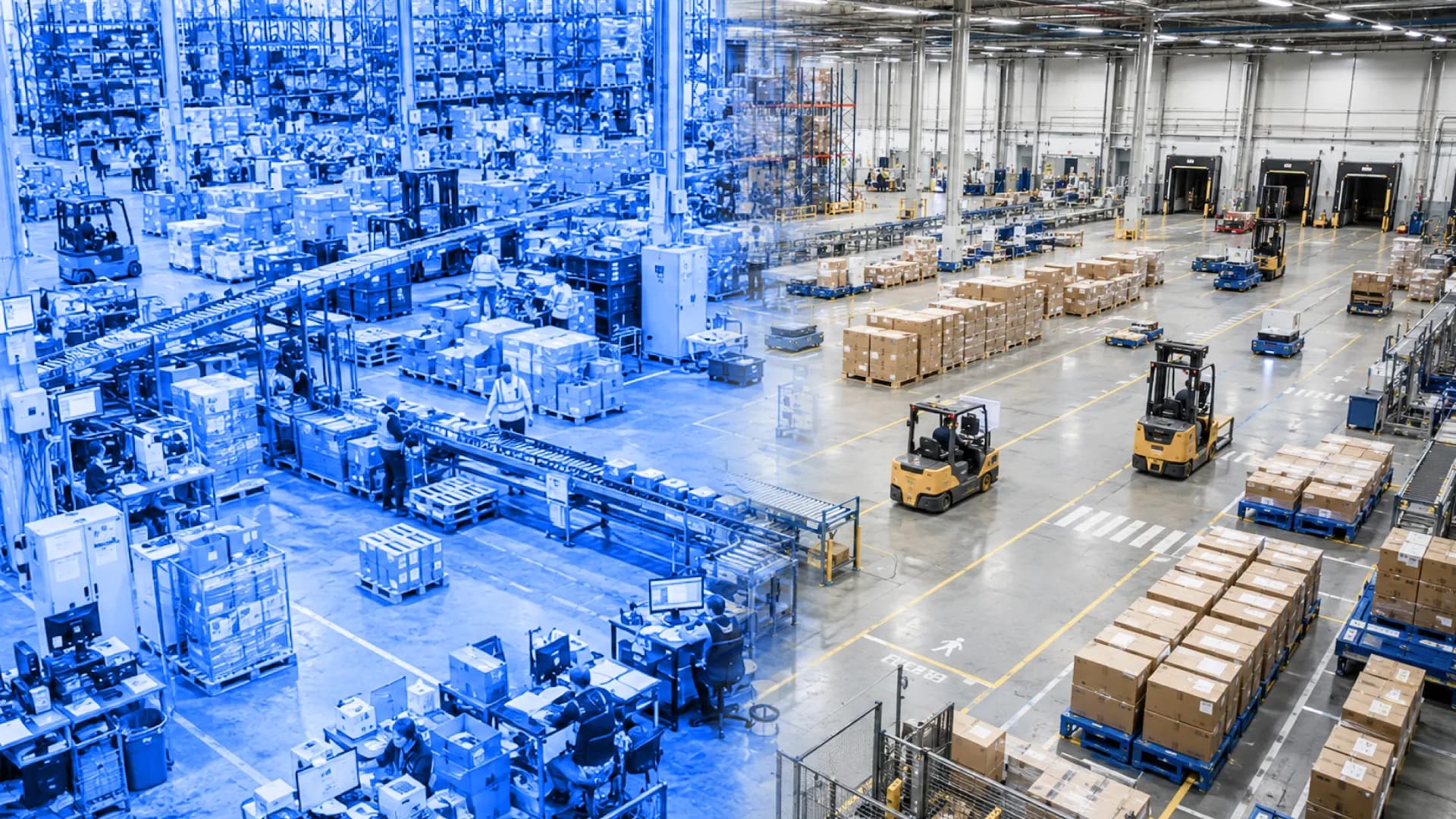
There is a reflex in intralogistics that has proved surprisingly hard to kill: as soon as the conversation turns to the future, everyone starts by talking about technology. Robotics. AMRs. Conveyor systems. The next big thing.
It sounds like progress. But often, it is simply the fastest way to answer the wrong question.
Because automation does not start with technology. It starts with planning.
That is the part with less shine, which is exactly why it is so often underestimated. Planning does not come with a polished demo. It exposes what really matters in daily operations: Which processes need to run reliably? Where are the bottlenecks? Which interfaces are already slowing performance down today? Which exceptions are overriding the standard process? And which decisions are based on solid data rather than gut feeling, routine, or wishful thinking?
That is precisely why good planning is more courageous than automation today. Buying technology shows activity. Planning properly means making uncertainty visible. It means naming conflicting objectives. It means explaining why the most spectacular solution is not automatically the right one.
Thorough planning is not the glamorous part of the project. It is the necessary one.
Good data analysis is the real starting point
Most projects move to the solution question too early. Which system? Which technology? What level of automation? All understandable questions — but often asked in the wrong order.
Before any technology decision comes proper data analysis.
Not as a box-ticking exercise. Not as management reporting. But as the foundation. Without reliable data, process design quickly becomes feeling with an Excel attachment.
Anyone who wants to understand how a future system needs to work cannot look only at averages. What matters are the real patterns underneath: SKU structures, order profiles, inventory dynamics, working time models, seasonal fluctuations, campaigns, marketing activities, cut-off times, staff shortages, special cases, and disruptions. Only then does a picture emerge that comes close to the reality of the future operation.
So the better question is not whether data exists. There is always data. The decisive question is: is it the right data?
Warehouses rarely fail because of the average. They fail because of peaks, priority conflicts, underestimated buffers, slowhandover times, and exceptions that were treated as footnotes in planning but later dominate everyday operations.
If you do not analyse this properly early on, you are not building the future. You are casting uncertainty into steel, software, and hardware.
The problem is rarely the technology — and almost always the system
A warehouse can have several highly optimised areas and still operate like a badly conducted orchestra. The conveyor system works. The robotics work. The manual area works. Just not together.
The reason is almost never a lack of innovation. It is a lack of orchestration.
Who sets priorities when capacity gets tight? Which rules apply during peaks? Who decides when objectives conflict? Where do invisible waiting times occur? Which interfaces are more critical than the hardware itself? And what happens when growth, shifts in the product range, or new service promises put pressure on the system?
These are not minor details. They are fundamental questions. If they are not answered early, you do not build a robust overall concept. You build a collection of trades and technologies that, sooner or later, slow each other down in live operation.
Good planning therefore does not think in isolated solutions. It thinks in connections. Processes, material flow, IT logic, operating model, and responsibilities need to work together — not just each component on its own.
Simulation is the moment when honesty becomes measurable
There is a sentence in logistics projects that usually appears shortly before trouble begins: “We’ll sort that out during the project.”
This is exactly where planning separates itself from hope.
Simulation is not a decorative extra for ambitious projects. It is the point at which concepts become reliable decisions.
As long as layouts, processes, and control logic have not been tested, assumptions remain exactly that: assumptions. Simulation shows where bottlenecks actually occur, which buffers are insufficient, where rule conflicts are hidden, how peaks affect the system, and where the system is likely to fail first.
It becomes even more valuable when feasibility, throughput, and control logic are assessed together — not just on paper, but in a realistic test environment before go-live.
The benefit is simple: problems that appear in the model cost nerves. Problems that appear only in operation cost money, time, trust, and often a significant share of the performance that was originally expected.
If you only plan for today, you often build something too rigid
Another classic mistake is planning for the current business, even though the system is supposed to support the operation for many years.
But business rarely stays the same. Product ranges grow. Sales channels shift. Access frequencies change. Sites take on new roles. Service levels rise. What looks efficient today may already be too rigid tomorrow.
That is why it is not enough to simply analyse historical data. You also have to project it forward. How will volumes, SKU counts, order profiles, and operational requirements develop over the next five or ten years? Which changes are likely — and which architecture can absorb them?
Good planning therefore also means considering scalability, adaptability, and expandability before these questions return later as expensive retrofits in an existing operation.
If you only look at CAPEX, you are planning past the operation
Automation is often discussed in terms of purchase cost. That is convenient, but far too narrow.
The purchase price is only the entry ticket. What matters is what comes afterwards: energy, maintenance, spare parts, labour, software support, expansions, downtime, training, and the cost of every later correction.
If you only look at CAPEX, you evaluate technology like a product. If you plan properly, you evaluate it like an operating system.
This is where a TCO perspective becomes essential. The supposedly cheaper solution is not automatically the more economical one. Sometimes it is simply the option with the invoice arriving later.
Good planning translates technology into lifecycle logic: not price versus price, but stability, controllability, and total cost measured against long-term requirements.
Conclusion
The most courageous decision in intralogistics today is not buying a robot.
The most courageous decision is to spend enough time before that purchase looking at processes, data, interfaces, scenarios, and costs.
Successful automation projects do not come from enthusiasm for technology. They come from a robust overall concept. Current processes, future growth, and operational realities need to be considered early. New concepts should be tested before they move into live operation. And implementation should only begin once planning and concept design are solid.
Everything else is not a strategy.
It is just technology optimism with a bill attached.

You may also be interested in:

Connect with us
Let’s talk about future-ready solutions for your business.
Contact