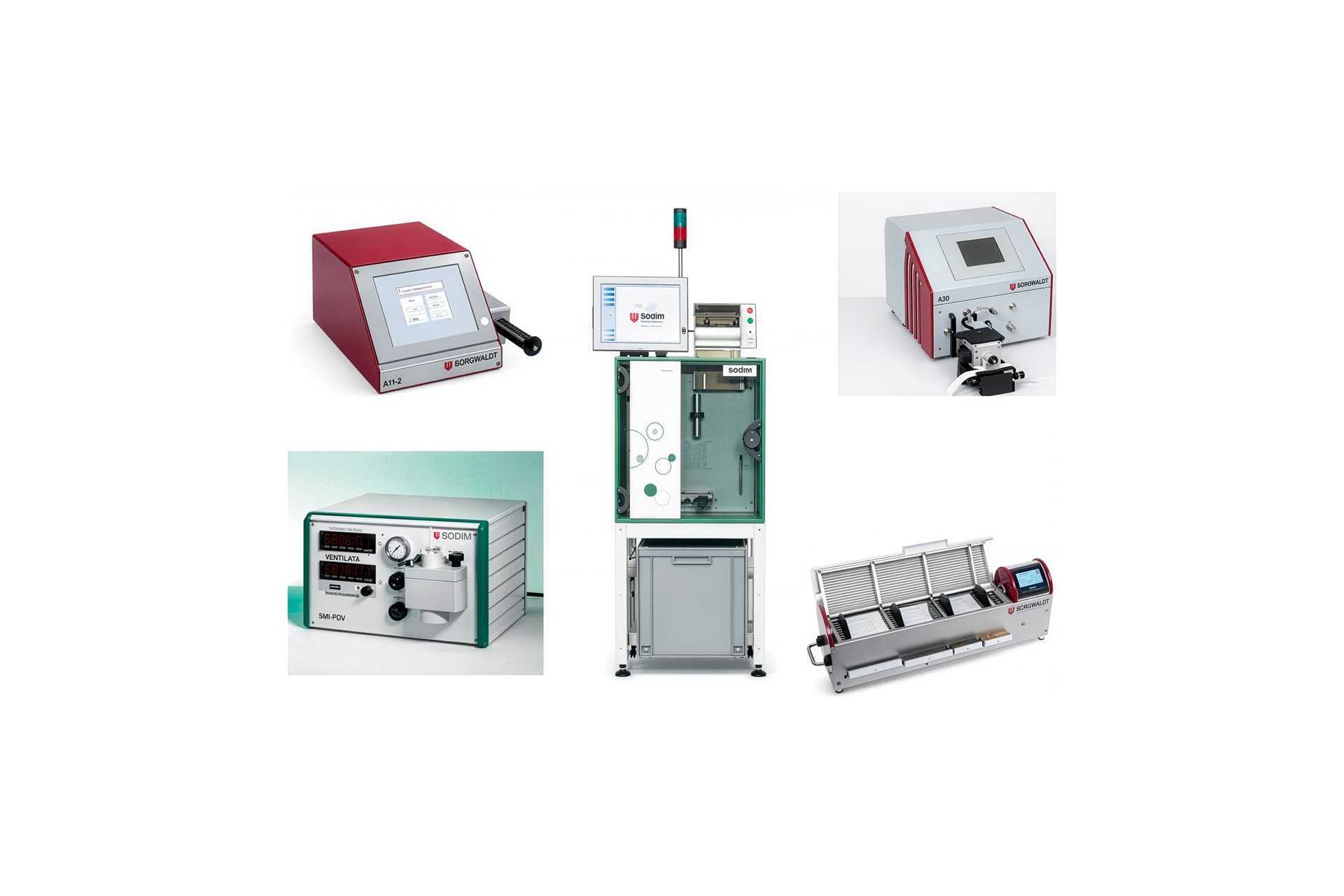
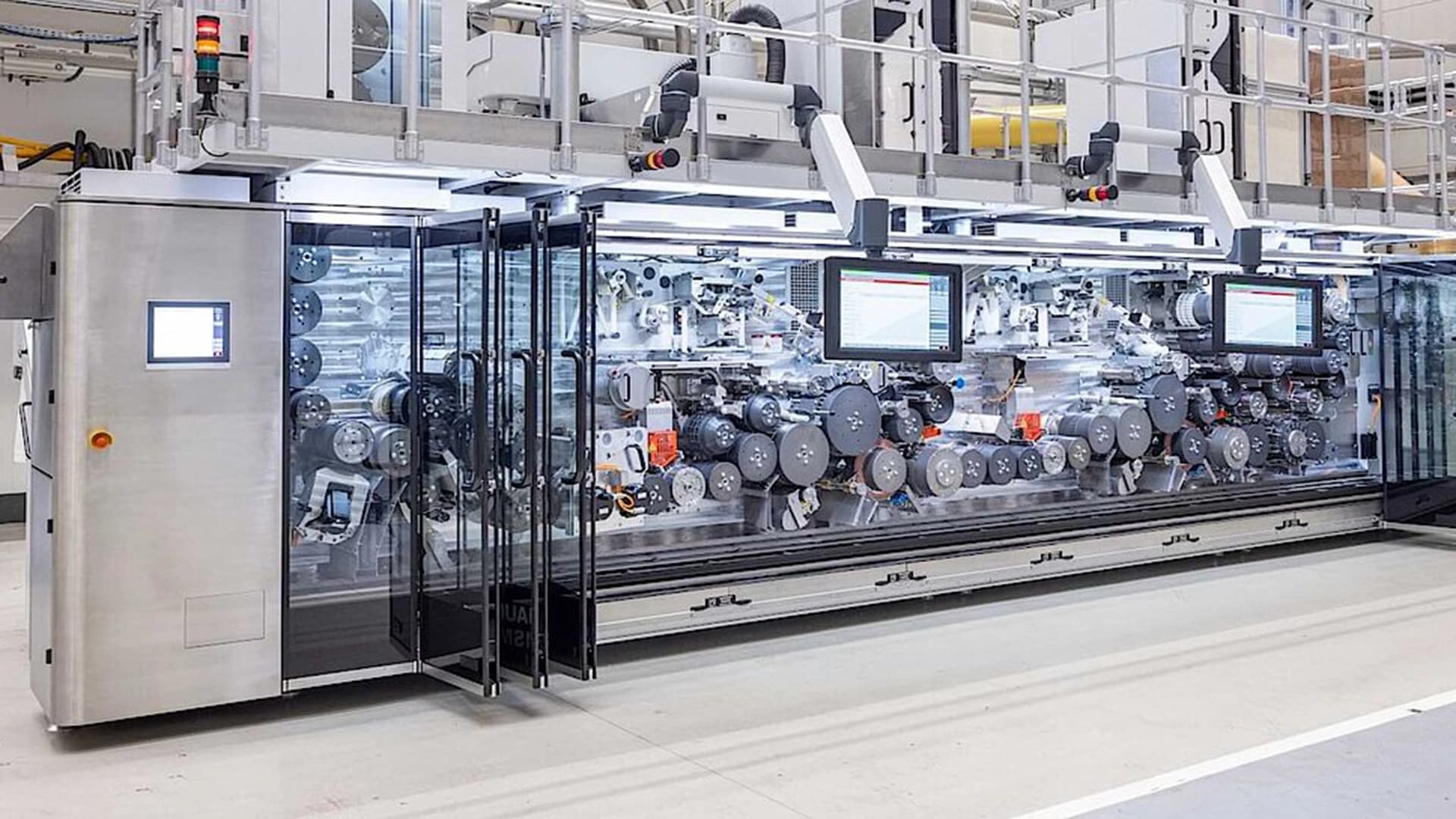
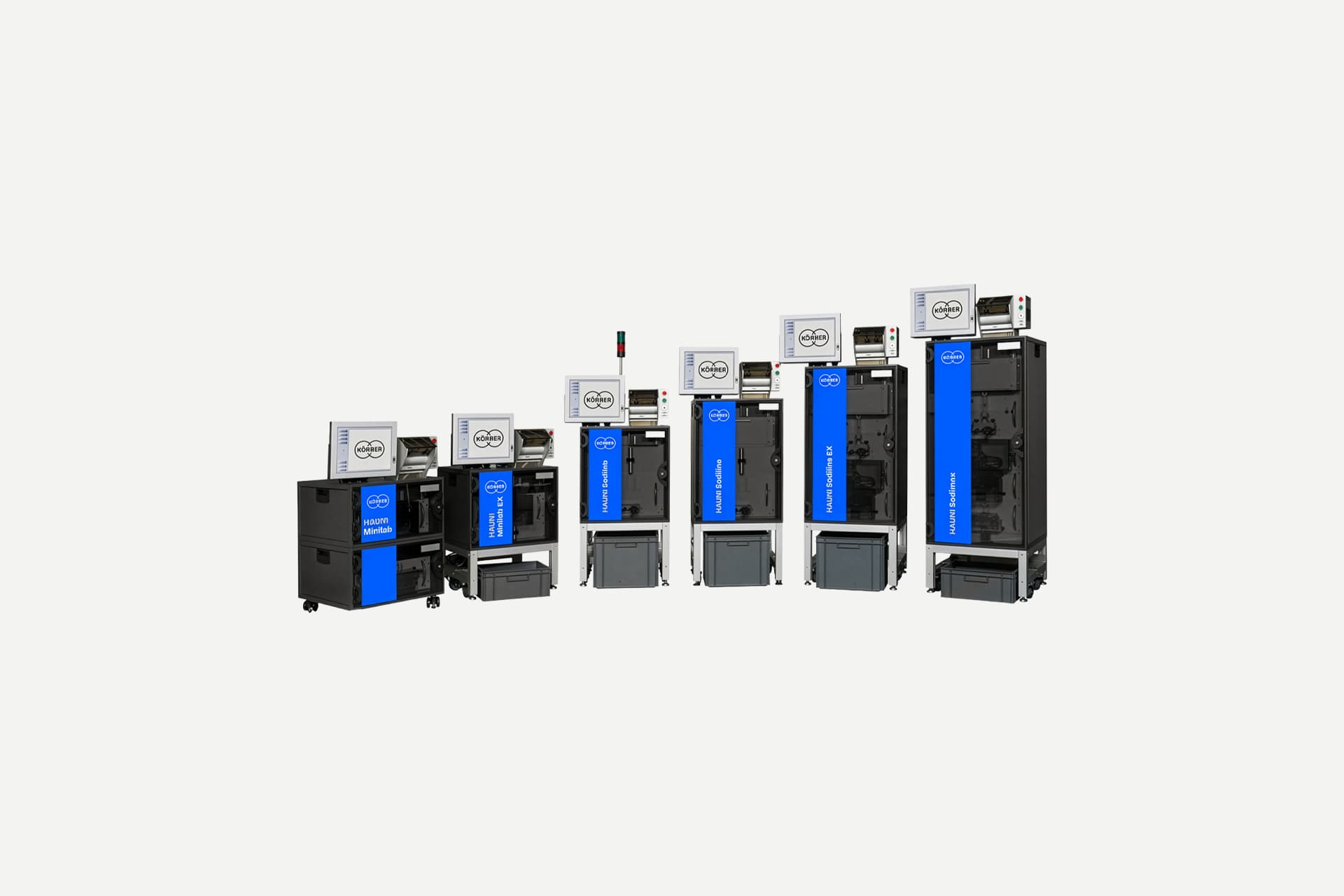
In some ways, tests for HTP are very similar to those for conventional filter cigarettes – parameters such as pressure drop, ventilation, weight, size, length and the stability of the ends apply to both. “As the Hauni Group’s metrology specialists, Sodim and Borgwaldt have decades of experience and expertise in this field. We can offer customers a host of solutions tailored to their specific needs,” explains Joost Elvers, Group Leader Key Account Management at Borgwaldt. “We use new kits and modules to adapt test stations and individual instruments to the constantly changing demands of the market. Right now, we’re focusing primarily on parameters such as the size of the multi-segment filter and its components, their individual hardnesses and the air permeability of the paper used.”
Aerosol tests
To facilitate the process of standardization, expert committees distinguish between three different HTP technologies when generating and collecting the HTP aerosols: electrically heated (eHTP), aerosol heated (aHTP) and carbon heated (cHTP) tobacco products. In the last of these, the heat source is a glowing carbon tip. “We have been building measuring instruments and developing our expertise since 1867. Our state-of-the-art systems are suitable for monitoring and collecting aerosols from all these HTP technologies,” explains Schmidt. “We offer solutions for different purposes and in a range of sizes – from one to 24 smoke or vaping channels.” Smoke traps are one technology that is currently under continuous development and refinement in this area. These devices collect substances for more detailed analysis. “We are continuously adapting to the changing needs of our customers with ever more sophisticated trap systems. Toxicology is another major focus of manufacturers and laboratories at the moment – our solutions for generating and collecting aerosols are an important step in this direction,” says Schmidt. “The instruments we manufacture can be used with almost any HTP device – not least to put the devices themselves through their paces with function, load and misuse tests.”
Heat not burn
Three different test methods are available to ensure that an HTP device does not burn any tobacco: smoking under oxygen-free conditions, quantification of carbon monoxide and quantification of nitrogen oxides. “Our equipment can support all these approaches,” explains Schmidt. “But that doesn’t mean that we’ve run out of ideas for new developments. We have lots of innovative features for our instruments in the pipeline.”