- Insights, stories & events
- Tobacco rods
No need to cut rods open
2 min read
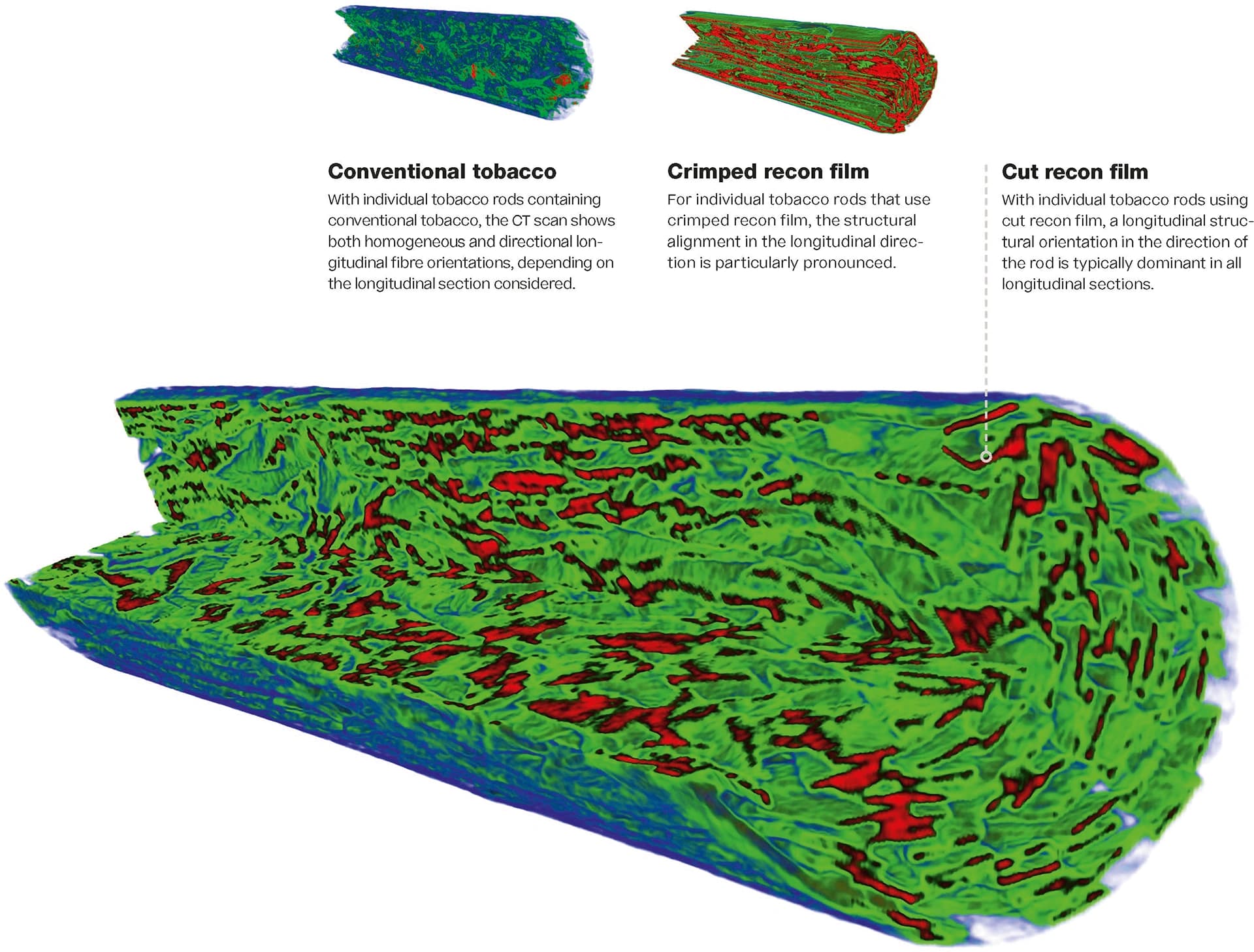
A computer tomograph (CT) at the Hauni Expertise & Technology Centre provides a nondestructive and highly accurate way to investigate fibre orientation in the tobacco rod, capsule positions in the filter, arrangement of filter segments in multi-filters and the distribution of carbon particles.
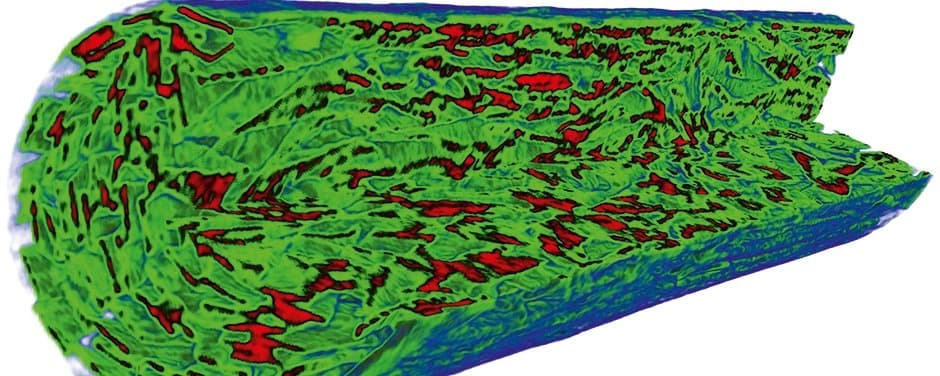
Fibre orientation has a significant impact on pressure drop, filling level, hardness, flow behaviour and heat distribution in cigarettes and Tobacco Heating Products. The ability to check and quantitatively compare the distribution and orientation of tobacco fibres in the tobacco rod is therefore vital for the cigarette industry. Until now, this was only possible using destructive methods – by carefully dissecting the products, visually inspecting them and assessing their quality.
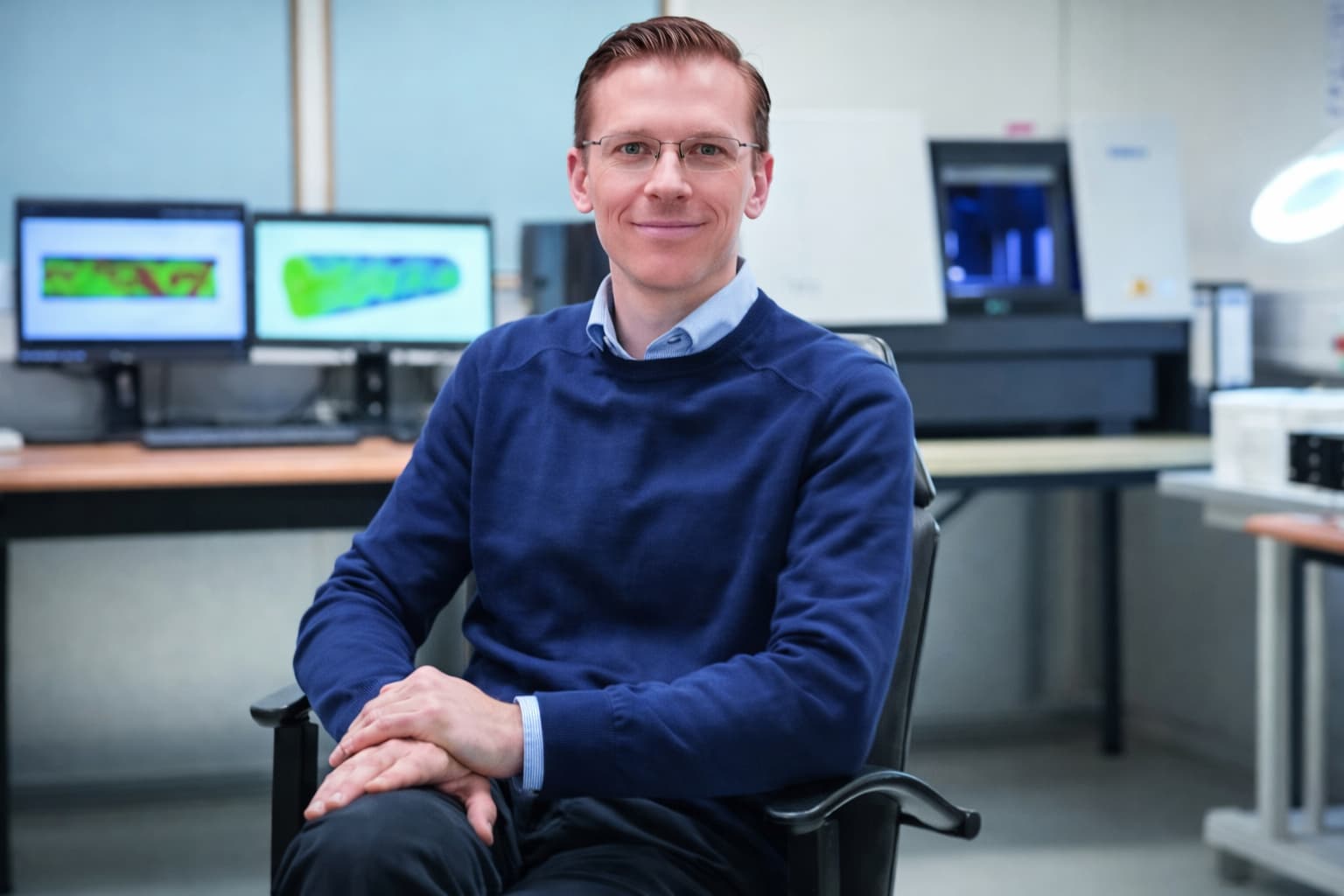
For Hauni development engineer Viktor Krasmik, who holds a doctorate in mechanical engineering, this was not a satisfactory approach. He decided to develop a new method that provides reliable and comparable test results based on scientific criteria. His method begins with the CT machine at the Hauni Expertise & Technology Centre.
First, the technician performs a complete scan of the individual tobacco rod and uses the data to construct a 3D digital model. Slices of this model can then be taken and the fibre orientation analyzed using 2D Fourier transformation. The results are reduced to simple key figures that can be used for customer-driven process development and for comparing mechanical engineering solutions.
You may also be interested in: